





AI in healthcare: improve patient engagement with Artificial Intelligence


July 27, 2026 12 min read 471 views
Learn how AI, automation, and digital patient engagement platforms improve communication, streamline workflows, and enhance patient experiences across the healthcare journey.
Patient communication has become increasingly digital, but better technology hasn’t always translated into better experiences. Patient portals, mobile apps, SMS, email, and messaging have become the front door to healthcare, yet patients still face long response times, disconnected experiences, and unnecessary friction while care teams struggle with overflowing inboxes and manual administrative work. Digital patient engagement addresses these challenges by using AI and automation to deliver personalized communication, streamline workflows, and connect every interaction across the care journey.
The goal isn’t more messages but better ones — timely, relevant, secure, and actionable. This article explores the biggest communication challenges in healthcare, how AI-powered patient engagement platforms solve them, the benefits for patients and providers, and the security practices needed to support digital care at scale.
Key takeaways on digital health tools
- Patient engagement solutions that triage, personalize, and automate messaging can shorten backlogs, increase response rates, and enhance patient satisfaction, without requiring additional staffing.
- AI assistants embedded within workflows and EHRs create a closed-loop action in digital health solutions, allowing tasks, orders, and documentation to be completed in one flow.
- Privacy-by-design practices (encryption, RBAC, audit trails) protect personal health information so scale does not diminish trust or compliance.
- Technology solutions, such as orchestrated journeys through the portal, SMS, and mobile apps. Increase patient engagement, reduce no-shows and readmissions, while improving health outcomes.
Why patient communication still breaks down in modern healthcare
Patient communication still breaks down in modern healthcare because information, workflows, and communication channels often remain disconnected. Patients use portals, SMS, and apps to message, while care teams manage phone calls, voicemails, and inboxes. Without orchestration, it’s just noise, slow replies, repeated questions, and lost context. That drag kills satisfaction and, ultimately, health outcomes. Here is where friction typically starts.
Staff burnout
Practitioners and administrative offices sort through untriaged messages, refill requests, and scheduling back-and-forth. Not only does labor going through sorting and copy-paste work impede clinic time, but “urgent” looks no different than routine. With this overload of work, documentation often occurs after the visit, and some tasks spill into overtime, increasing the risk of error. Burnout is not simply volume. It is the mental tax incurred through switching systems, back and forth from one thread of communication to another. The outcome is poor care coordination, inadequate patient education, and increased turnover.
Delayed responses
People are accustomed to speedy responses, but legacy workflows are not designed to meet these patient expectations. A symptom question lands in the wrong queue; a pre-op instruction appears and remains unread; a secure portal message disappears into a shared inbox. Without smart routing rules, escalation paths, or after-hours coverage, these simple patient issues become a game of phone tag.
High cost
Having fragmented digital tools and platforms means that your team has created duplicate work and rework. Staff will need to repeat instructions, follow up on missed appointments, and then chase down forms that could have been automated. Each avoidable call or manual reminder incurs an operational expense; each missed screening or prep step increases clinical risk. Combined across the enterprise, the lack of coordinated examples of digital health engagement leads to increased solution spend, masking performance issues: you can’t fix what you can’t measure.
What’s missing? A communication layer that helps determine priority at the front door, routes by intent and urgency, personalizes content, and closes the loop in the EHR/CRM. When messages are structured, escalations are automatic, and education is incorporated, teams regain time, and patients receive the correct answer faster.
AI and automation solutions for better digital health engagement
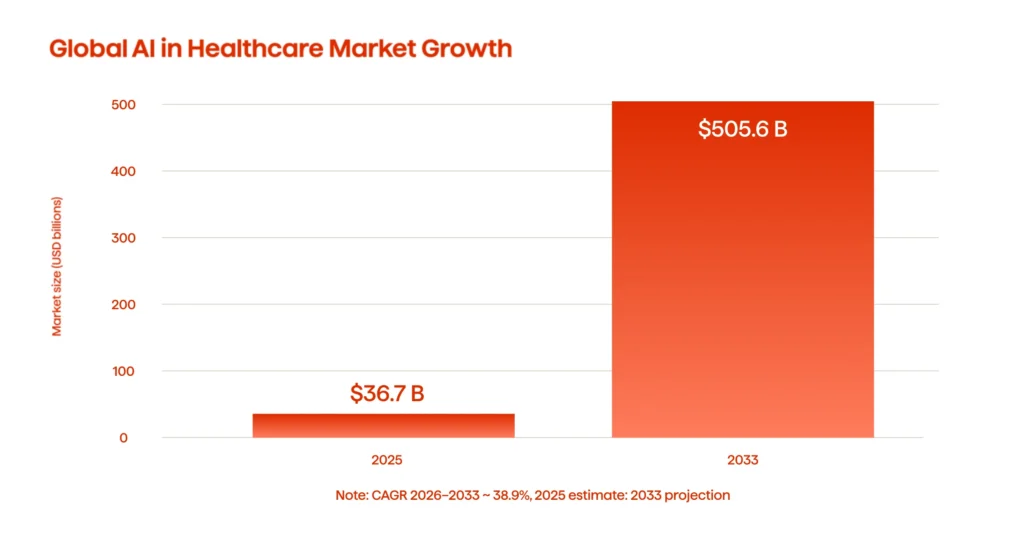
AI and automation are becoming practical tools for digital patient engagement, helping healthcare providers improve communication, personalize interactions, and reduce repetitive administrative work. Intelligent triage, virtual assistants, and automated outreach are already changing how care teams manage patient requests and deliver support at scale. With a global market value of $36.7 billion in 2025, it is projected to grow to $505.6 billion by 2033 at an impressive 38.9% CAGR. The tools to engage patients at scale are here, and they’re practical.
AI-powered communication and personalized patient engagement
At the practice level, AI improves patient engagement through several practical applications. The first is intelligent triage.
Incoming messages and portal notes are analyzed by natural language processing (NLP), an AI algorithm that determines their intent and urgency based on the context of each request. It then queues the appropriate incoming communications and proposed responses for the clinician for review. Allowing virtual assistants to perform laborious tasks, such as answering frequently asked insurance questions, providing pre-participation instructions, offering directions, and checking refill statuses, is the second way to improve patient care. This enhances the patient experience by saving staff a significant amount of time and enabling a faster response to patients. To improve adherence to a plan of care, the third approach involves proactive patient outreach tailored to the patient’s specific condition and preferred language (e.g., automated reminders, pre-visit education, or post-discharge follow-up phone calls).
Alongside everyday communication, next-level engagement originates from orchestrated journeys predicting the integration of micro-interactions into any meaningful outcome. A modern platform for patient engagement orchestrates care plans, medications, and preferences, determining how to sequence various touchpoints via SMS, app, email, IVR, or the patient portal.
Pre-op? It sends a checklist, gets a quick readiness survey, and schedules a ride. Post-discharge? It checks pain, wound photos, and medications taken; if risks are elevated with responses, it opens a same-day telehealth encounter. These are not one-off pings; they represent adaptive pathways that learn and respond to patterns of behavior.
The use of digital tools can enhance health literacy without overwhelming individuals with information. The content is organized into pieces that utilize visual and bilingual formats. The reading level auto-adjusts, and interactive explainers meaningfully turn “NPO after midnight” or “titrate as directed” into straightforward actions. Quizzes and micro-rewards support retention in chronic care, allowing patients to stay engaged just long enough to develop a habit, such as consistently attending follow-ups, and establish a new relationship with their health. For “clinicians,” copilots create pre-populated summaries of education that are pulled from the visit note, so the staff do not have to rewrite the exact instructions.
Enhance research capabilities and optimize R&D strategies with tailored digital technology.
AI-enabled healthcare workflows and engagement optimization
AI also extends beyond everyday communication by connecting patient engagement with the workflows that support care delivery. By automating repetitive processes and coordinating actions across systems, it helps teams create more consistent and efficient patient journeys.
To achieve this at scale, we need to bring closed-loop tasks to the point of care. When someone requests a refill, a protocol is initiated that checks for allergies, the most recent lab results, and benefits, and proposes the order for signature. The prior-auth question prompts a payer bot to retrieve the criteria, drafts the prior-auth form using existing chart data, and generates the order protocol. The intake forms pre-fill from the EHR, identify missing items, and nudge only what is needed — no more clipboard deja vu.
Preference intelligence is another force multiplier. The platform captures which channel(s) a person actually engages with, when to engage them, and what tone resonated best. It then automatically chooses the “best next channel/time” while honoring their consent and language, A/B testing subject lines, button labels, or call-to-action phrases quietly in the background, so the system continues to learn what helps engage patients without adding a burden.
The same patterns establish meaningful connections in life sciences. Potential trial recruits receive eligibility screeners and appointment scheduling in their preferred language. Adherence check-in escalations are directed to a coordinator only when risk signals are present. Electronic Patient-Reported Outcome (ePROs) systems integrate directly with the study’s electronic data capture (EDC). For patient-support programs, benefits verification, copay enrollment, and nurse outreach are integrated within a single journey, with seamless transitions and no dead ends.
At last, view measurement like a product. The patient engagement platform must reveal real-time KPIs, including metrics such as response time, first-contact resolution, show rate, refill turnaround, readmissions, and CAHPS items, along with cohort drill-downs (age, language, SDOH). Link the campaign analytics, if desired, to clinical and financial outcomes, not just clicks. Teams are confident in iterating on pathways when they are empowered to see which pathways reduce no-shows or improve blood pressure control.
How AI-powered patient engagement improves patient experience and healthcare outcomes
AI-powered digital patient engagement improves healthcare communication by giving patients faster, more personalized support while helping providers reduce administrative workload and coordinate care more efficiently. Patients will receive quicker responses, instructions in plain language, and proactive nudges to turn uncertainty into action. Automated reminders, pre-visit preparations, and post-discharge check-ins will increase respective compliance and decrease complications.
Clinicians and operations personnel are also experiencing this. Message triage and crafted replies reduce inbox time; smart scheduling smooths demand; and structured documentation is passed to the EHR with fewer clicks. Leaders gain visibility into throughput, turnaround, and satisfaction, allowing them to tune pathways driven by outcomes rather than their hunches. Most importantly, more transparent two-way communication lowers the temperature under challenging moments; less “healthcare aggression” results from delays and misunderstandings, and more empathy is driven by timely, customized information.
| Outcome | Patient impact | Provider impact | Example digital tool |
|---|---|---|---|
| Faster turnaround | Quicker answers in the patient portal; less uncertainty | Lower backlog; smoother staffing | AI triage + reply drafting |
| Better adherence | Timely nudges; clear prep/aftercare tied to health data | Fewer no-shows/readmissions | Personalized reminders and education |
| Higher satisfaction | Friendlier comms; fewer loops | Reduced healthcare aggression; fewer escalations | Multilingual, plain-language messaging |
| Workflow quality | Simple access to plans and labs | Structured notes/orders in EHR; fewer clicks | EHR-integrated digital platforms |
Security and compliance (HIPAA, privacy, governance)
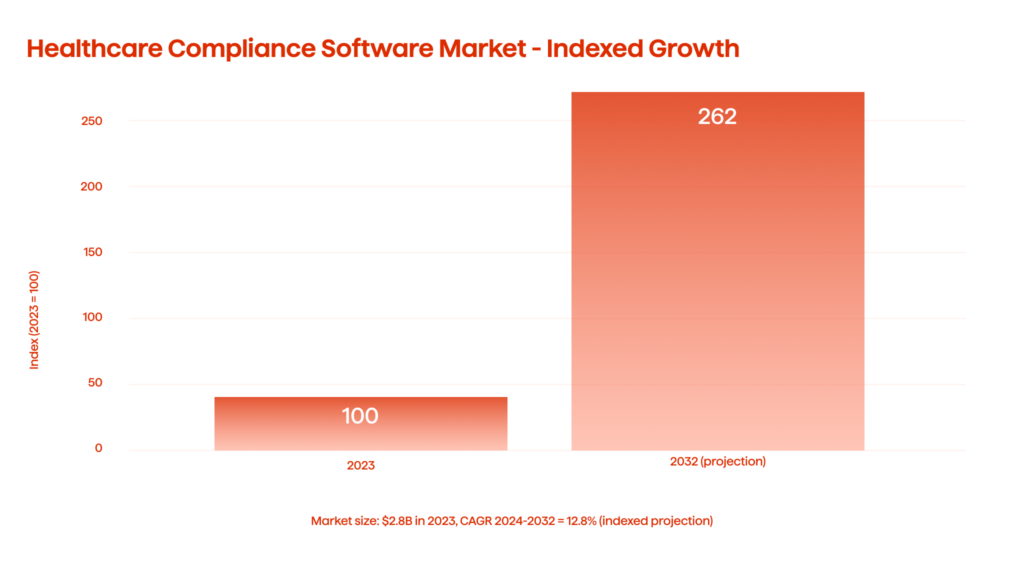
As digital patient engagement scales, healthcare organizations need security and compliance frameworks that can keep pace with growing data volumes, regulatory requirements, and AI-driven workflows. The healthcare compliance software market is projected to grow at a CAGR of 12.8% between 2024 and 2032, reaching $8.1 billion by 2032 as organizations move toward more automated and scalable compliance management.
For any healthcare organization, start with privacy by design. Define clear access boundaries, restrict the exchange of health information, and encrypt data both in transit and at rest. Implement least privilege, role-based access, and robust identity controls, including multi-factor authentication (MFA) and single sign-on (SSO). Maintain audit trails that map directly to HIPAA, state regulations, and payer contracts, and log all activities, including access, exports, and model prompts.
Following that, you have to govern content and models. You can use redaction and allow-lists within conversation tools, and restrict PHI prompts; and you must include a human in the loop for clinical decisions. You must validate outputs against a trusted source, monitor for drift and hallucination, and manage prompt/policy versions similarly to code.
Ensure compliance in your workflows and patient engagement applications to ensure smooth integration. Connect security signals to your software solution — flag unusual access, throttle suspicious API access, and quarantine potentially malicious messages before delivering them to the patient.
Ultimately, keep track of what matters: the time it takes for rights (access, amending, deleting) to be fulfilled, MTTR breach, and policy coverage. Strong controls should not slow patient care; they should enable care in a way that demonstrates digital trust to our patients and defensibility to regulators.
FAQ
Building continuous, personalized digital health engagement
With digital technologies in health, communication becomes a care asset — faster, more personal, and measurably practical. Build workflows that rely on patient engagement, where every message creates momentum to enhance the patient experience and optimize operating costs.
If you want to learn more about life sciences software development, how to improve patient engagement, and reach better health outcomes, contact Avenga, your trusted technology partner that brings digital transformation to the health industry.



Your business results matter
Achieve them with minimized risk through our bespoke innovation capabilities. Fill in the form below.