






Cloud technologies and data analytics in automotive industry: Use cases


June 18, 2026 11 min read 328 views
This is how cloud and data are opening the door for new innovations
Cloud technologies and data analytics are the twin engines driving digital transformation in the automotive industry. Over the years, they reshaped everything from vehicle design and manufacturing to the driving experience and post-sales services. While the depth of this topic could fill an entire book, this article offers a concise overview of the key technologies and their impact on automotive businesses. We’ll explore how these innovations have evolved, their current use cases, and the trends shaping their future.
The evolution of cloud and analytics in automotive
The automotive industry used to be hardware-centric, with minimal and siloed data collection. The first major shift came with the rise of telematics, which enabled vehicles to transmit basic information such as location and engine diagnostics. Early telematics data flowed in at a trickle compared to what came next. A more transformative change occurred with the adoption of cloud computing, which provided the scalable infrastructure needed to store and process the massive influx of data from modern vehicles built around connected architectures.
This foundational development allowed companies to move from reactive to proactive strategies. Manufacturers began using real-time data to optimize production lines and perform remote software updates, a concept known as Over-the-Air (OTA) updates.
Data analytics evolved in parallel with cloud technologies, expanding its role exponentially. Today, connected vehicles equipped with a network of sensors generate vast datasets on performance, driver behavior, and environmental conditions.
Cloud-based analytics platforms, often powered by AI and Machine Learning, process data to enable predictive maintenance, inform the design and engineering of new vehicles, and deliver personalized driving experiences. This evolution marks a fundamental shift: the car is no longer merely a mode of transport, but a software-defined device at the center of an interconnected mobility ecosystem.
Discover how we built a long-term strategic partnership with Wind River, achieving 70% faster software delivery.
Cloud technologies in automotive: Use cases
Modern automotive businesses leverage cloud technologies across every dimension of their operations. This integration creates measurable value in efficiency and customer satisfaction.
The digital factory: Manufacturing and supply chain
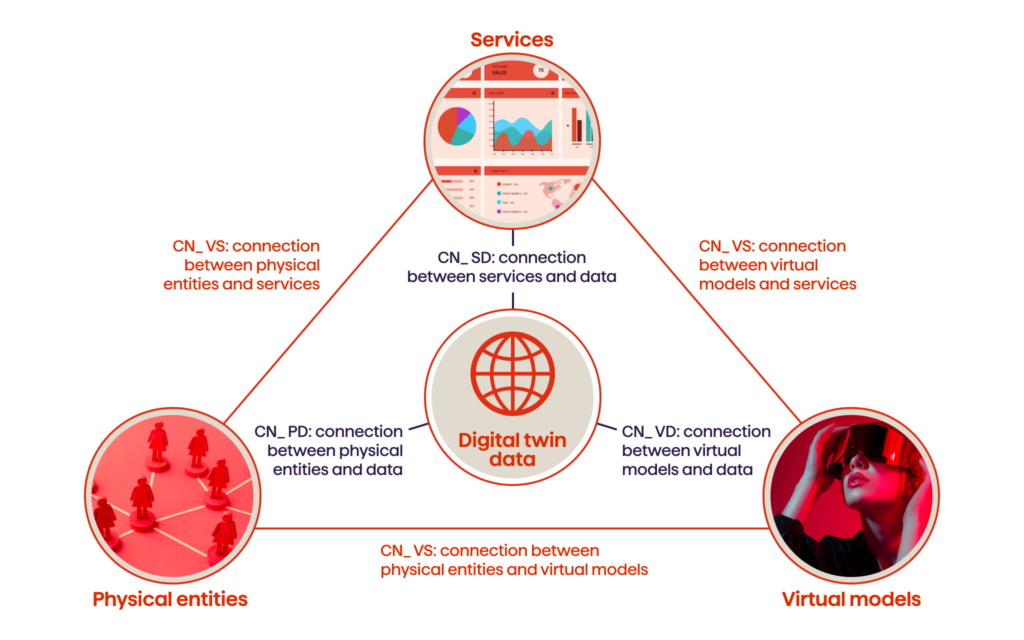
Manufacturers are increasingly adopting digital twins — cloud-based virtual replicas of their production lines. This is a rapidly growing field, with the global digital twin market in automotive expected to soar from $2.1 billion in 2024 to $28.7 billion by 2034, according to Global Market Insights. These models ingest real-time sensor data from the factory floor and apply real-time analytics to achieve a couple of tasks. They can simulate process changes, predict bottlenecks, and optimize robot-human workflows, all without interrupting production. Plant managers use data from the twin to test layout changes virtually before committing to physical rework.
See below for a digital twin model built around three core elements (services, physical entities, and virtual models):
The in-car experience and recurring revenue
The cloud has become the backbone of connected services — now a major profit center for automakers. This revenue stream is powered by Over-the-Air (OTA) updates that deliver everything from infotainment apps to performance enhancements and advanced driver-assistance features. A recent example is Ford’s BlueCruise, which features a hands-free driving system delivered and updated via OTA. The automaker is transforming a safety feature into a recurring subscription service. By and large, this shift towards features on demand is a central strategy for nearly every major player in the field.
Accelerated R&D and engineering
Automotive engineers utilize the massive computational power of the cloud for complex simulations. By running thousands of virtual crash tests and aerodynamic simulations in the cloud, automakers can reduce their reliance on costly and slow physical prototypes. A digital-first R&D approach can shorten vehicle development timelines and offer a crucial advantage in a fast-moving market. Cloud-based technologies enable carmakers to innovate more quickly and respond more effectively to shifting consumer preferences.
Customer journey
Customer experience has become an omnichannel journey powered by the cloud. Cloud-based CRM platforms create a 360-degree view of each customer through data integration across sales records, service history, and in-vehicle usage patterns. This unified insight enables personalized marketing, tailored financing offers, and timely service reminders. As more of the car-buying journey shifts online, this data-driven approach is becoming essential for maintaining engagement across the automotive sector.
Data analytics in automotive: Use cases
The role of data and analytics has profoundly transformed how automotive companies make decisions, optimize operations, and deliver value to customers.
Predictive maintenance
Predictive analytics for maintenance has become a game-changer because it can help automotive companies and fleet operators anticipate component failures before they cause downtime. Currently, the majority of global manufacturers are deploying predictive maintenance technologies.
Engine vibration and temperature readings flag issues that affect vehicle performance before they cause failures. Data science techniques applied to driving patterns, road conditions, and fuel consumption set the maintenance schedule from there.
Autonomous vehicles
The rise of the connected car has turned vehicles into data goldmines. A single connected car can collect data at a rate of over 25 gigabytes per hour from its sensors, cameras, and GPS systems. These volumes of data are essential for training Machine Learning models that power autonomous driving systems.
Companies like Waymo (owned by Alphabet) and Cruise (majority-owned by GM) process petabytes of data generated by their test fleets. They run several simulations each day to compound the enormous amount of data they collect. These simulations allow companies to test millions of virtual miles safely, exposing their systems to dangerous scenarios that would be too risky to create in the real world. Analytics processes both real and simulated data to continuously refine algorithms.
Advanced Driver Assistance Systems (ADAS)
ADAS features rely on advanced data processing to turn raw sensor inputs into split-second safety decisions. Sensors constantly capture information about the vehicle’s environment, detecting objects, pedestrians, lane markings, and other vehicles. Analytics algorithms then analyze data in real time to support immediate driver assistance actions, with the entire decision-making loop running in milliseconds.
Beyond real-time performance, data analytics enables continuous improvement of ADAS functionality. Manufacturers review anonymized data collected from active systems to understand:
- Which scenarios trigger false alarms, helping to refine algorithms
- How drivers interact with and respond to ADAS interventions
- What environmental conditions challenge system performance
- Which features offer the greatest safety benefits
Long-term projections indicate that if ADAS technologies gain widespread acceptance, they could prevent about 37 million crashes, 14 million injuries, and 250,000 deaths over the next 30 years. This makes ADAS one of the most valuable uses of automotive data analytics.
Electric vehicle battery analytics
As electric vehicle (EV) sales continue to grow worldwide, battery analytics has become a vital tool for improving performance, lifespan, and safety. Battery Management Systems (BMS) collect vehicle data on charge cycles, temperature, voltage, current, and degradation patterns. Core EV challenges, including range anxiety and battery degradation, are being addressed through data analysis, delivering tangible benefits for consumers, fleet operators, and manufacturers alike.
Every modern EV is equipped with a BMS that serves as its primary data collection hub. The BMS continuously samples and transmits high-resolution data, often capturing hundreds of data points per second.
Advanced analytics algorithms, often powered by Machine Learning and digital twin technologies, process this vast stream of time-series data to deliver actionable insights in key areas such as range optimization, performance improvement, and second-life battery applications.
Trends and developments
Several key trends are shaping the trajectory of cloud and data analytics integration in the automotive industry:
1. Edge computing integration is becoming increasingly important as vehicles generate more real-time data that requires immediate processing and analysis. The automotive edge computing market is experiencing rapid growth. It is forecast to reach USD 85.4 billion in 2035 and grow at a compound annual growth rate of 19.9% from 2025 through 2034.
2. Generative AI enhance the driver experience and broaden the scope of in-vehicle interaction. This innovation addresses a clear market demand as car owners cite an improved digital experience as a key reason to consider switching brands. This finding suggests that automakers who successfully integrate Generative AI into vehicle user interfaces will gain a substantial competitive edge.
Agentic AI is more recent and more capable. An agent can schedule a charging session around off-peak energy prices, book maintenance when sensor readings cross a threshold, or coordinate a vehicle handover for a service appointment without driver input. At OEMs and tier-one suppliers, agents are starting to coordinate routine work that used to require manual handoffs between engineering, supply chain, and dealer operations.
3. Sustainability analytics is emerging as a vital pillar of automotive strategy as manufacturers face mounting pressure to minimize environmental impact. Advanced analytics enable optimization of energy consumption across operations, prediction and reduction of waste generation, and implementation of circular economy principles at scale within automotive manufacturing.
4. Quantum computing applications in automotive are on the horizon, with potential to reshape complex optimization problems such as traffic management, battery chemistry optimization, and supply chain logistics. As McKinsey underlines, mobility, finance, and life sciences are among the industries that could experience the greatest growth.
Automotive companies that can successfully orchestrate these technologies will shape the future of mobility.
Cloud and data excellence at your fingertips
We help businesses accelerate AI adoption through custom software development and pre-built tools that reduce implementation risk and speed up time-to-market. Here’s what you can leverage:
- AI Cloud Companion. A comprehensive evaluation service that tests and compares cloud AI models and services. It provides performance reports, pinpoints model weaknesses, and offers recommendations to help businesses choose the optimal AI solution for their specific needs.
- Avenga Genie. A secure, enterprise-focused GenAI platform that functions like ChatGPT but with enhanced security and compliance features. It enables businesses to automate workflows, generate content, extract insights from internal data, and integrate AI capabilities through APIs.
- ADAS Prototype. An automotive AI system for Advanced Driver Assistance Systems (ADAS) that delivers high accuracy in object detection, segmentation, and depth estimation using only neural networks and stereo cameras — eliminating the need for costly LiDAR. This solution significantly enhances vehicle safety and autonomy.
Find out more about our capabilities here: AI Accelerators.
FAQ
Cloud and data analytics in the automotive industry: Final thoughts
The synergy between cloud technologies and data analytics has become a defining force in the modern automotive industry. To stay ahead, companies should develop their true mastery. The challenge lies in the relentless pace of innovation as what is considered state-of-the-art today quickly becomes tomorrow’s standard. This constant evolution demands a proactive, forward-looking commitment to continuous improvement and transformation.
Be prepared for the age of AI. Contact our automotive experts to integrate the technologies that will power your future business growth. Build, think, and run with Avenga.



Digital transformation in telecom: A complete guide
Your business results matter
Achieve them with minimized risk through our bespoke innovation capabilities. Fill in the form below.