







Mobility trends 2027: Global mobility market size, AI, and urban transport


October 27, 2026 10 min read 906 views
The mobility industry’s next step is turning electric, automated, and connected transport pilots into reliable everyday services. The key mobility trends are electrification, autonomous vehicles, AI agents, integrated booking, and more accessible last-mile services. Their business value depends on connecting vehicles, infrastructure, and passenger information so journeys become more reliable and fleets cost less to operate. For the mobility industry, the priority is moving from isolated pilots to transportation systems that work under everyday conditions.
This outlook examines global mobility through the decisions operators, manufacturers, and cities need to make: where to automate, how to electrify, which services to connect, and how to measure results. Avenga’s transportation software development connects route planning, fleet management, and logistics workflows around these operating needs.
Key takeaways
Investment should connect cleaner vehicles, dependable software, and accessible services. Before choosing a platform or supplier, define the operating outcome and the evidence required to scale. These priorities provide a starting point:
- Electric fleets need charging, energy management, and route planning to work together.
- Autonomous services require evidence of safety within clearly defined operating conditions.
- AI agents can coordinate workflows, but permissions and human escalation remain essential.
- Integrated mobility must support accessible journeys, workable economics, and reliable information.
What are the key mobility industry trends for 2027?
Six changes are shaping investment: electric propulsion, automated driving, AI coordination, connected services, assistive technology, and better use of operational data. These industry trends reinforce one another, but each needs a different business case. A fleet operator may prioritize vehicle availability, while a municipality needs affordable access and efficient urban transportation.
| Trend | Practical application | Measure of progress |
| Electrification | Match charging with vehicle schedules | Energy cost per kilometer |
| Automated driving | Operate within a validated service area | Safety and service availability |
| AI agents | Coordinate dispatch and disruption response | Resolution time and intervention rate |
| MaaS and shared services | Connect planning, booking, and payment | Completed door-to-door journeys |
| Assistive technology | Make routes and interfaces accessible | Successful assisted journeys |
| Connected operations | Share trusted vehicle and infrastructure data | Data freshness and reliability |
Mobility market analysis: Market size and regional trends
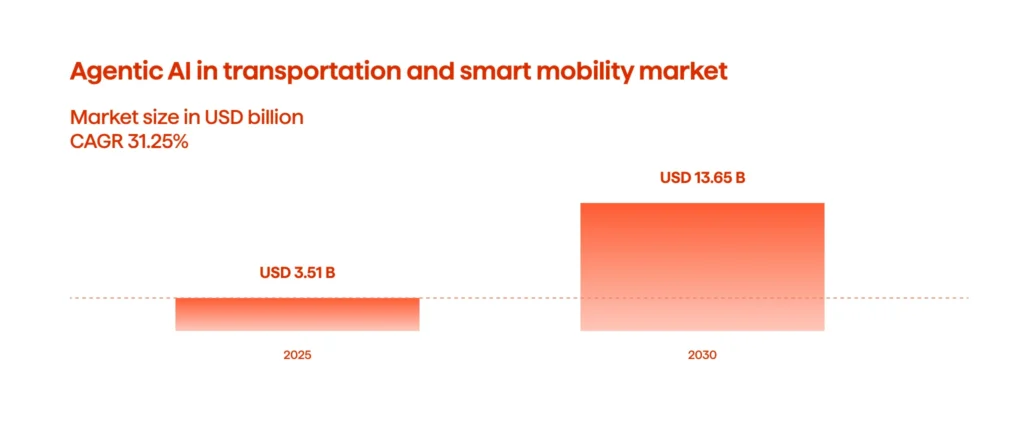
The mobility market has no single useful market size because vehicle sales, software, passenger transport, and shared services measure different activity. A market report should define its geography, revenue boundary, and forecast period before comparing growth rates. A segment described as growing at a CAGR cannot establish the opportunity for every operator or technology supplier.
The IEA’s 2027 EV outlook reports more than 20 million electric car sales worldwide in 2025, representing one-quarter of new sales. China’s electric car sales share was nearly 55%, Europe’s 28%, and the United States’ just under 10%. Sales in Latin America grew 75%, while Southeast Asian sales more than doubled. These differences show why market segmentation matters: the Asia-Pacific region, Europe, North America, and the Middle East and Africa need separate assessments.
For market share analysis, distinguish the installed fleet from new sales and electric cars from all road vehicles. An operator comparing market share in 2025 with later projections should keep those definitions consistent. Regional trends and forecast assumptions help explain the competitive landscape; local charging access, fares, regulation, and demand determine whether an investment can earn a return.
How are AI and autonomous vehicles changing transportation?
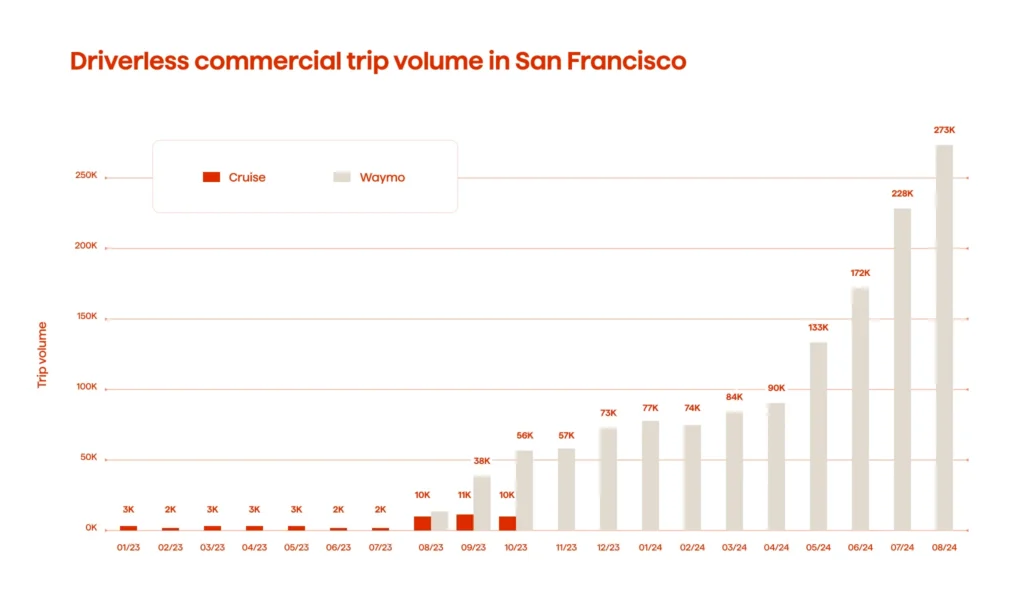
AI and automated driving can improve service coordination, but operators must validate each use case before expanding. AI improves prediction and coordination, while autonomous driving applies perception and control to a defined driving task. Fully autonomous service in one operating area does not establish readiness for every road or weather condition. Waymo’s safety impact dashboard reports 271.3 million rider-only miles through June 2027 across five operating areas. Its geographic benchmarks and methodology matter when interpreting those results.
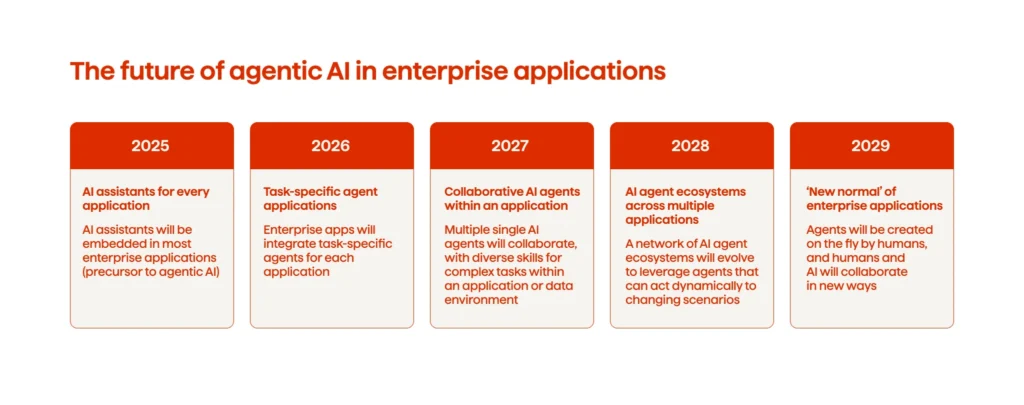
Agentic systems address a different layer: dispatching vehicles, checking disruptions, arranging alternatives, or preparing customer responses. Gartner’s enterprise application forecast predicted task-specific agents in 40% of enterprise applications by the end of 2027, up from less than 5% in 2025. This is a cross-industry forecast, not proof of transport adoption. Avenga’s agentic AI services support controlled execution with defined tools, permissions, and human review.
How are electrification and electric vehicles transforming mobility?
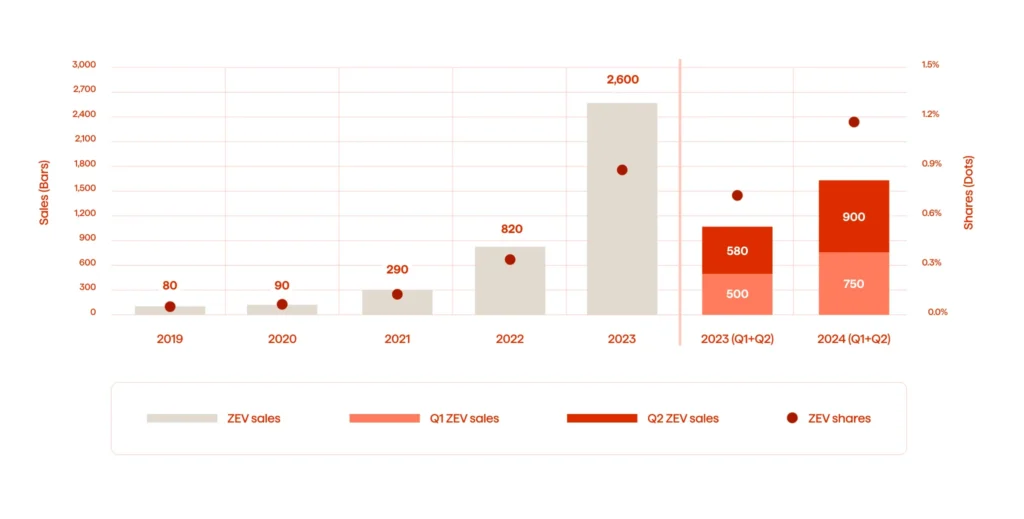
Electrification changes vehicle procurement into an energy and operations decision. Passenger cars, buses, delivery vans, and heavy goods vehicles have different duty cycles, so battery capacity and charging schedules must reflect actual routes. The IEA projects 23 million electric car sales globally in 2027, or 28% of new sales; that projection should remain distinct from completed sales.
Freight and bus operators also face policy pressure. The EU’s heavy-duty emissions standards set fleet CO₂ reduction targets of 45% from 2030, 65% from 2035, and 90% from 2040 for relevant vehicle groups. New city buses face zero-emission targets of 90% in 2030 and 100% in 2035. These are manufacturer fleet requirements, not a blanket ban on existing diesel trucks. Operators still need to evaluate purchase price, grid connections, charging downtime, maintenance, and financing.
Connect vehicle software, fleet data, and customer journeys around measurable operating goals.
How do shared mobility, micromobility, and MaaS change urban travel?
Shared mobility and micromobility extend public transport by covering trips that fixed routes serve poorly. A shared bike, scooter, or demand-responsive shuttle can connect a station with workplaces or housing. Mobility as a Service (MaaS) brings discovery, booking, payment, and updates together, helping a commuter compare transportation options without rebuilding the journey in separate apps.
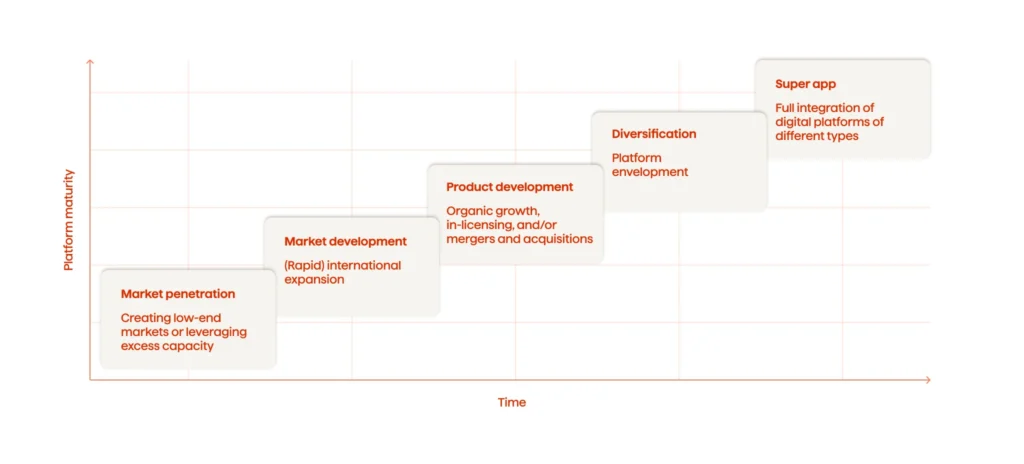
The difficult work is operational integration. A useful mobility ecosystem must reconcile schedules, fares, vehicle availability, refunds, and disruption handling across providers. Urban transportation networks also need workable parking rules and safe transfer points. For rural or seasonal passenger transportation, lower demand may favor booked connections and local partnerships over an always-available service. Success means a completed journey at a sustainable cost, not simply more downloads.
What emerging technologies are shaping the mobility landscape?
Emerging technologies should improve operating decisions, such as when to charge a vehicle or recover a delayed service. Connected sensors, edge computing, digital twins, and artificial intelligence help operators detect problems and test responses. IoT devices provide vehicle location, battery condition, and infrastructure status. Intelligent transportation systems can combine these signals with smart traffic controls to improve coordination in urban centers. The useful output is a decision, such as changing a charging slot or dispatching a replacement vehicle.
These technological advancements depend on information and communication standards, connectivity, and dependable data ownership. Avenga’s data services cover the engineering and governance foundation for data analytics across connected operations. Urban air mobility solutions may address selected routes, but certification, landing infrastructure, noise, and economics still need assessment. Rapid technological advancements alone do not establish commercial readiness or justify replacing established urban transport.
What are the recent trends in assistive technology for mobility?
Assistive mobility combines physical support with digital access: powered wheelchairs, accessible navigation, voice interfaces, and reliable information about lifts, boarding, and assistance. WHO’s assistive technology factsheet estimates that more than 2.5 billion people need at least one assistive product. That figure covers many product categories, not transport users alone. For urban mobility, the practical question is whether a person can complete the whole journey independently or with appropriate support.
A planner should test step-free routes, accessible payment, audio and visual information, and recovery when equipment fails. Digital tools need to match physical conditions: an accessible booking interface cannot compensate for an unavailable ramp. Involve people with disabilities in design and testing, and evaluate actual journey completion rather than treating accessibility as an interface checklist.
What challenges slow adoption of new mobility solutions?
Cost, fragmented systems, safety requirements, and public trust can slow deployment. Electric fleets may wait for grid upgrades; shared services may struggle with low utilization; automated systems may encounter conditions outside their validated limits. AI-driven workflows add privacy and security risks when software can access location data, change bookings, or initiate payments. Each deployment needs a clear accountability framework.
Start with a bounded use case, name its owner, and define the conditions for expansion. Test disruption handling, supplier failure, and human escalation before rollout. Contractual responsibilities should cover data access, incident response, and service recovery. Operators should expand when evidence shows dependable performance, rather than assuming a successful demonstration will scale across different urban environments.
Mobility technology earns its place when it improves the journey or the operation behind it. Connected data, clear responsibilities, and reliable software matter as much as the vehicle. Start with an outcome people can measure, then build the integration and safeguards needed to repeat it.
Stefan Marxreiter, VP Automotive at Avenga
How can mobility become more sustainable and accessible?
Sustainable mobility requires cleaner vehicles, useful shared services, and accessible connections that reduce avoidable journeys. Electrification can lower tailpipe emissions, but vehicle occupancy, energy sourcing, infrastructure, and empty running affect the wider result. Sustainable transportation should also address congestion and environmental pressures without making essential trips unaffordable or excluding people who cannot use a smartphone.
For sustainable and efficient urban transport, a municipality can assess cost per passenger journey, accessibility, reliability, and emissions together. This reveals opportunities for urban services that connect housing, employment, and transit hubs. The goal is sustainable urban development supported by transportation services that meet mobility needs in dense urban areas and underserved communities, with published measures that residents can understand.
The practical future of transport depends on matching technology with operating needs. These questions clarify the main trends, the role of connected systems, and how to evaluate a deployment before committing to wider expansion.
FAQ
Conclusion: What is the future of mobility?
The future of mobility is a more connected mix of electric fleets, established transit, shared services, and carefully governed automation. Progress in the mobility sector will depend on how well these parts work together for passengers, drivers, and operators. The strongest next step is a practical deployment with a clear owner, a trusted data foundation, and evidence of improved service.
For the automotive industry and wider global market, technology choices should follow route economics, user needs, and infrastructure readiness. If you are planning an integrated platform, fleet modernization, or an AI-enabled service, contact Avenga to turn that operating goal into an engineering plan with measurable outcomes.

Key healthcare technology trends for the second half of 2026


Your business results matter
Achieve them with minimized risk through our bespoke innovation capabilities. Fill in the form below.