






Six manufacturing trends for 2027: Technology and the manufacturing market


October 29, 2026 10 min read 837 views
The priority for manufacturers in 2027 is connecting production information with decisions that improve quality, reliability, and resource use. Six defining manufacturing trends are AI-assisted operations, connected data and digital twins, automation and robotics, resilient supply networks, sustainable production, and advanced materials and processes. Their value depends on integration, representative testing, and the ability of people to operate and maintain the resulting systems.
The latest trends in manufacturing should be evaluated against a specific production constraint rather than a technology’s popularity. Avenga’s manufacturing software services support the software and integration work behind connected operations. This overview separates practical engineering choices from unsupported claims about guaranteed savings, universal connectivity performance, or automatic improvements in competitiveness.
Key takeaways
The key trends combine technology with operating discipline. A successful pilot needs a baseline, reliable source records, an accountable owner, and a safe fallback. Manufacturers should compare quality, downtime, workload, and resource consumption before deciding whether a new capability is ready for wider deployment.
- Start with a defined production problem and measure the full cost of solving it.
- Connect equipment and business records without losing context or process ownership.
- Keep AI recommendations distinct from permission to change a physical process.
- Include security, workforce training, and recovery procedures in the investment plan.
How AI and generative AI are being used in manufacturing
AI can assist with document retrieval, anomaly detection, and preparation of maintenance or planning information. Generative AI can summarize an approved procedure, but its output still needs verification before it influences production. Define which sources are authoritative, how uncertainty is handled, and who approves consequential actions. A fluent answer is not evidence that a recommendation is technically correct or safe.
Investment interest is substantial, but survey results are not guaranteed returns. Deloitte’s 2025 manufacturing survey found that 78% of respondents allocated more than 20% of their overall improvement budget to smart manufacturing initiatives. Those initiatives include several technologies, not just agentic AI. Avenga’s AI services connect use-case design with evaluation and controlled integration.
For an agent that prepares a purchase order or proposes a schedule change, separate information gathering from execution authority. Apply approval limits, audit records, and exception handling before connecting enterprise systems. AI-assisted planning should respect material availability, process constraints, and validated safety controls rather than optimizing a single metric without regard to downstream effects.
Connected data, digital twins, and the industrial Internet of Things
Digital manufacturing needs consistent identifiers, timestamps, units, and context across equipment and business records. The industrial Internet of Things can provide observations from manufacturing equipment, but collecting more data does not make it ready for analysis. Check measurement quality, ownership, retention, and the relationship between a sensor reading and the physical process it represents.
A digital twin is useful when its model and update frequency match the decision being tested. NIST’s 2025 laboratory paper describes a manufacturing testbed supporting research, standards, and implementation. It does not imply that every simulation accurately represents a factory. Validate models against observations and document where their assumptions stop being reliable.
Edge computing and private wireless networks are infrastructure options, not universal requirements for smart factories. Evaluate coverage, latency, maintenance, and behavior during an outage under actual site conditions. Private 5G does not guarantee a particular end-to-end response time. Avenga’s data services support the engineering and governance needed to make connected records reusable across operations.
Automation, robotics, and quality control
Automation is most useful when a repeatable task has clear acceptance criteria and manageable exceptions. Machine learning may support visual quality control, while robotics can assist with handling or repetitive physical tasks. Assess throughput, inspection errors, ergonomics, and recovery behavior together. A system that moves work faster but creates more rejects or difficult-to-detect defects has not demonstrated a sound production benefit.
Industry 4.0 projects should define how people and machines interact during normal operation, setup, maintenance, and failure. Include operators and safety specialists in the design, and preserve appropriate physical safeguards. Use representative products and conditions in testing, then measure the work needed to handle exceptions and maintain performance over time, rather than relying solely on a demonstration.
Connect manufacturing software, data, and AI around dependable production, measurable improvements, and accountable delivery.
How manufacturers are managing supply chain disruptions
Supply chain resilience depends on usable information and realistic alternatives, not only extra stock. Manufacturing companies should map material dependencies, supplier concentration, qualification lead times, and recovery options. Tariff changes, geopolitical events, and transport disruption can affect cost and availability differently. Test several scenarios before changing sourcing or production plans, and distinguish a proposed alternative from a qualified replacement.
For supply chain management, connect demand, inventory, capacity, and quality holds with clear ownership of exceptions. Planning tools need to represent physical constraints rather than assume that a different route or vendor is immediately available. Global supply visibility can improve coordination, but it cannot remove bottlenecks. Measure the time from a warning to a documented action and the cost of recovery.
How sustainability is shaping the manufacturing industry
Sustainable manufacturing begins with measuring material use, energy consumption, waste, and rework at a meaningful process level. Renewable energy and storage may be suitable investments, but the business case depends on site load, local costs, reliability requirements, and available infrastructure. Compare alternatives with the same boundary and reporting period, including maintenance and the resources required to implement each option.
Green manufacturing claims also need evidence about the product and process being compared. A lower operating temperature or a bio-based input does not by itself establish a lower overall environmental impact. Review resource use, feedstock, recovery, and end-of-life assumptions before claiming improvement. Tie investment to measurable reductions or operating benefits rather than treating a sustainability label as proof.
What is the next big thing in manufacturing technology?
Advanced manufacturing includes additive processes, generative design, biomanufacturing, and materials engineering. Each creates different qualification and scale-up challenges. A geometry proposed by a design tool still needs to meet material, inspection, and production requirements. For biomanufacturing, assess yield, contamination control, downstream processing, and feedstock variability before assuming that a laboratory result will transfer to industrial volume.
NIST’s part qualification research describes measurement challenges involving complex geometry, defects, and mechanical properties in additively produced components. Design and manufacturing decisions must include how a part will be inspected and qualified, especially in aerospace and other critical applications. Production feasibility and cost depend on material, volume, post-processing, and the acceptance criteria for the intended use.
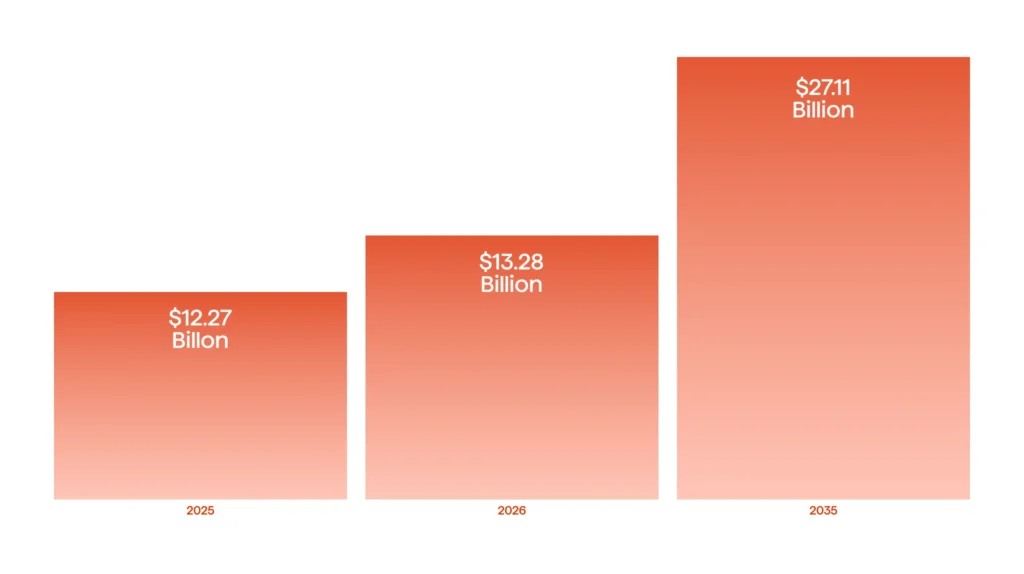
Semiconductor manufacturing illustrates why industry-wide forecasts cannot replace process-specific analysis. Cleanliness, specialized equipment, utilities, and qualification requirements differ from those of other manufacturing facilities. New manufacturing investments in America and Europe need local assessments of skills, infrastructure, suppliers, and operating cost. A growing global market does not establish that every proposed site or technology will be commercially viable.
US manufacturing market trends: Output, capacity, and jobs
US manufacturing performance depends on which measure and period are being compared. The Federal Reserve’s industrial production framework distinguishes output, capacity, and capacity utilization. An announced project, a change in employment, and a change in production are not interchangeable indicators. Use consistent dates and definitions before attributing a movement to policy or comparing regional market trends.
How manufacturers are addressing workforce challenges
Manufacturing jobs change when new systems alter tasks, responsibilities, and required skills. An automation project does not establish a reliable forecast of the loss of jobs. Plan training, supervision, maintenance, and exception handling with the people who perform the work. Measure the total workload and the skills needed to sustain the service, not simply the number of manual steps removed.
Outsourcing and engineering services can add capacity, but process knowledge and decision ownership must remain clear. Specify interfaces, documentation, access permissions, and handover requirements before expanding a project team. The manufacturing sector needs support models that survive staff changes and supplier transitions. Include a practical route for operators to report errors, challenge recommendations, and request changes.
Cybersecurity for the connected manufacturing industry
Cybersecurity in operational technology must account for physical safety, reliability, and availability. NIST’s OT security guide addresses those characteristics; Revision 3 remains a final publication while Revision 4 is under development. Assess inventories, access, network boundaries, remote maintenance, and recovery with operational specialists. Do not apply a change that could disrupt production simply because it is routine in an office environment.
Connected manufacturing and industrial systems also depend on external vendors and shared components. Avenga’s cybersecurity services support risk assessment and operational protection. Assign owners to vulnerabilities and recovery procedures, test backups, and document how teams coordinate during an incident. Security controls should be maintained alongside the process they protect, rather than added after integration.
| Initiative | Evidence needed | Pilot measure |
| AI assistance | Representative cases and approval boundaries | Errors and correction effort |
| Digital twin | Validated assumptions and source measurements | Prediction error for the intended decision |
| Inspection support | Ground-truth labels and failure tests | Missed defects and false rejects |
| Resource optimization | Comparable process and reporting boundaries | Energy, material use, and rework |
A manufacturing AI project should begin with the decision people need to make and the evidence available to support it. Reliable data, clear permissions, and realistic testing matter as much as the model, especially when a recommendation can affect a physical process.
Olena Domanska, AI Engineering Manager at Avenga
FAQ
Conclusion: What is the future of manufacturing?
Recent trends in manufacturing favor connected information, disciplined testing, and measurable operational value. Choose new technologies that address a defined constraint and can be maintained safely within the real process. To evaluate your software, data, or AI priorities against practical delivery needs, Contact Avenga and define an achievable starting point.



Your business results matter
Achieve them with minimized risk through our bespoke innovation capabilities. Fill in the form below.