






Data-driven retail: How retail data and AI shape the future of retail

September 7, 2026 10 min read 165 views
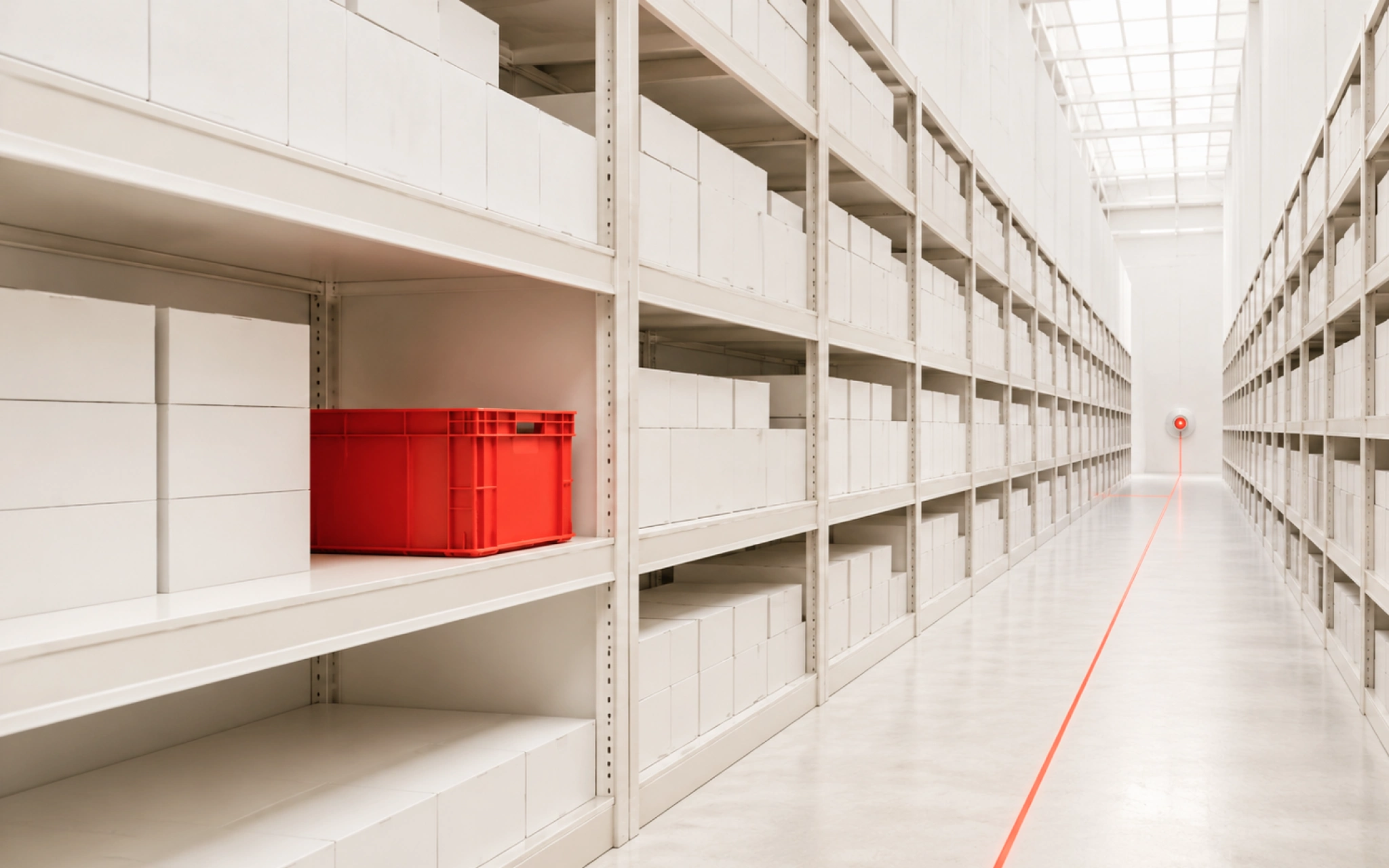
A customer sees an empty shelf. The retailer sees a much longer story.
Demand increased after a promotion. Online orders consumed local stock. A supplier arrived late. Inventory data updated several hours behind the actual store position. Marketing continued advertising the item because its system showed availability.
The problem is not a lack of data. Retail businesses create data across stores, e-commerce, loyalty, inventory, pricing, marketing, logistics, and customer interactions every minute.
The problem is turning those signals into a decision while they still matter.
Deloitte reported in its 2025 retail outlook that 6 in 10 retail buyers said AI-enabled tools improved demand forecasting and inventory management in 2024. Seven in 10 retail executives expected to have AI capabilities in place during 2025 to support personalization.
Data-driven retail starts here. A retailer connects information across the business, gives teams a dependable source of truth, and applies analytics and AI where better information can change an operating result.
Data-driven retail: Key takeaways
- A shared data base comes first. AI cannot compensate for conflicting customer, inventory, product, and transaction records.
- Retail analytics works best close to a decision. Forecasting, replenishment, pricing, marketing, and store operations all need clear owners.
- Real-time data matters selectively. Inventory availability and fraud may need seconds, while long-term assortment planning does not.
- AI can help predict demand and identify patterns at scale. Retailers still need people to interpret unusual conditions and approve higher-risk actions.
- Customer data needs context and permission. Personalization should use approved information and respect how customers expect their data to be used.
- Omnichannel retail depends on shared information. Store, digital, inventory, order, and service teams need consistent records across touchpoints.
The goal is not collecting more data. It is getting better evidence to the person or system responsible for the next decision.
What data intelligence means in retail
Data intelligence combines data management, analytics, business context, and AI so information can support daily work.
Retail data may include:
- Transactions
- Customer data
- Product data
- Inventory data
- Prices and promotions
- Loyalty activity
- Website and mobile behavior
- Supply chain events
- Store traffic
- Returns
- Marketing responses
- Customer service records
The challenge is that these data sources often belong to different applications.
A retailer may have one customer ID in CRM, another in e-commerce, and a third in the loyalty platform. Inventory levels may differ between ERP, warehouse software, and the store.
Forbes noted in 2025 that 51% of U.S. brands reported suffering from “dark data,” information they collect but do not effectively use. Fragmented sales, inventory, marketing, and engagement records make real-time decision-making harder.
A single source of truth does not necessarily mean one database. It means agreed definitions, ownership, lineage, and rules for how systems exchange information.
Avenga’s application modernization services can support retailers where legacy applications prevent reliable data movement between stores, commerce, ERP, CRM, and operational platforms.
Without reliable data, advanced analytics simply produces more precise-looking uncertainty.
Retail analytics use cases across the value chain
Retail analytics becomes useful when the output connects to a repeatable action.
Demand forecasting and inventory
Forecasting influences replenishment, staffing, purchasing, promotions, and supply chain decisions.
AI can analyze historical sales alongside:
- Price changes
- Promotions
- Seasonality
- Store location
- Weather
- Online activity
- Local events
- Stock availability
A retailer can use the forecast to optimize inventory and reduce out-of-stocks without holding unnecessary stock everywhere.
A 2025 study found that, across a dataset covering more than 1.6 million SKUs, current inventory, short-term demand forecasts, and recent sales were the most influential variables for predicting stockouts.
This is why near-term information matters. A forecast from last month may be statistically sound and operationally useless after demand changes.
Supply chain and replenishment
Retailers can use data across suppliers, warehouses, stores, transportation, and orders to understand where availability is at risk.
AI-driven models can forecast delays, recommend replenishment, and support supply chain planning.
The same data can help retailers and distributors answer practical questions:
- Where should available stock go first?
- Which supplier delay affects the most revenue?
- Which store is likely to run out tomorrow?
- Which products are available somewhere else in the network?
- When does expedited shipping cost more than the lost sales it prevents?
AI optimizes supply decisions only when the underlying inventory and logistics information is current enough to trust.
Customer experience and personalization
Retailers can analyze customer behavior across digital and in-store touchpoints to understand preferences, purchase frequency, product affinity, and service history.
They may use those signals to personalize:
- Recommendations
- Promotions
- Loyalty rewards
- Messaging
- Service
- Search results
This can create a better customer experience when the interaction fits actual customer needs.
It becomes irritating when a model repeats something the customer already bought or ignores a recent complaint because the service platform has not updated the marketing system.
A seamless customer journey still depends on unglamorous data work behind the scenes.
Omnichannel retail
Omnichannel sales require shared information about products, inventory, orders, customers, and fulfillment.
A shopper may browse online, buy through an app, collect in store, and return through another location.
Each step should see the same order and inventory state.
McKinsey noted in 2026 that retailers are increasingly equipping store associates with AI-supported clienteling tools that provide real-time inventory visibility, customer context, and recommended next actions.
Real-time insights matter here because the decision changes quickly.
Avenga works with companies through its retail engineering services across commerce, data, software, AI, and connected retail operations.
AI and data across retail operations
Artificial intelligence becomes more useful as data quality improves.
Retailers can use AI for:
- Demand forecasting
- Product recommendations
- Pricing analysis
- Marketing strategies
- Stockout prediction
- Fraud detection
- Customer-service assistance
- Store planning
- Supply chain analysis
AI can analyze more variables than a person could reasonably compare at once. It can also identify granular insights across thousands of products, stores, and customer groups.
Avenga’s AI services support the engineering work required to connect models with operating processes, data, and human decision points.
Retailers should not use AI simply because the data exists.
The use case should start with a question such as: What decision becomes faster, more accurate, or less expensive if this prediction is available?
That keeps data and AI tied to business work rather than experimentation.
From analytics to automated processes
Analytics explains or predicts. Automation acts.
Retailers can automate low-risk tasks such as:
- Replenishment recommendations
- Case routing
- Product categorization
- Marketing triggers
- Inventory alerts
- Routine customer responses
AI agents can go further by collecting information and completing several approved steps.
For example, an agent might detect an expected stockout, check alternative inventory, review transport options, and prepare a transfer request.
Avenga’s agentic AI services cover agent architecture, connected tools, permissions, monitoring, and human approval.
Automation should not hide decision-making.
The higher the financial, customer, or operational effect, the clearer the approval rules should become.
Turn fragmented retail information into a governed data base for analytics, AI, and daily decisions.
Building a data platform for retail
A data platform brings information from operational and customer systems into a structure teams can use for reporting, analytics, and AI.
It may connect:
- ERP
- POS
- E-commerce
- CRM
- Loyalty
- Inventory
- Warehouse systems
- Marketing
- Customer support
- Logistics
The data pipeline needs to preserve ownership and timing.
Not every field should become real-time data. Teams should provide real-time updates where delay changes the decision and use scheduled processing elsewhere.
Data engineers build and maintain pipelines. Data scientists develop models. Business teams define what the output means and how it should affect the process.
This division matters.
A platform for retail should not become a large technical project disconnected from stores, merchandising, supply chain, and customers.
What prevents retailers from getting more from data?
Technology is rarely the only constraint.
Common problems include:
- Siloed systems
- Duplicate customer identities
- Missing product attributes
- Delayed inventory updates
- Poor data quality
- Conflicting KPI definitions
- Limited data access
- Weak model monitoring
- Unclear ownership
Retailers also need to distinguish between data they can collect and data they should use.
Customer expectations around privacy matter. So does the reliability of AI-powered decisions.
A retailer trying to harness every possible signal may create more noise than information.
The better question is which reliable data supports the chosen business decision.
How retailers can move from retail data to action
A retailer does not need to optimize every facet of your business in one program. Start with one area where poor information already has a measurable cost.
- Choose the decision. Inventory, demand, pricing, customer service, or another specific process.
- Identify the required data sources. Do not begin with every dataset available.
- Assign ownership. Establish who owns the metric, source data, model, and business action.
- Build the baseline. Measure current cost, forecast error, stockouts, sales performance, or customer satisfaction.
- Test the analysis. Compare data-driven insights with the current method.
- Connect the result to work. Put insights where planners, associates, marketers, or operators already make decisions.
- Measure again. Track whether the change improves profitability, availability, operational efficiency, or service.
The ambition may be to optimize every part of retail eventually. The first project should be much smaller.
Retail data creates value when teams can trust it, understand what changed, and act before the opportunity or problem disappears. AI at the core should connect information across the retail value chain without moving responsibility away from the people running the business.
Fabian Hasse, Senior Business Development Consultant at Avenga
Smarter decisions require fewer unresolved questions about where the information came from.
The future of retail is built on connected data
The future of retail will include more AI, automated replenishment, agent-assisted shopping, dynamic fulfillment, and individualized customer interactions.
Consumer goods and CPG brands face the same basic requirement.
AI requires high-quality data.
Retailers that leverage connected information can react faster to changes in demand, inventory, and customer behavior. They can also use data to drive more precise decisions across the value chain.
This does not mean every decision should become automated.
The practical future is a mix of analytics, AI, employees, and operating systems working from consistent information.
Done well, data-driven insights can help reduce costs, increase revenue, and support sustainable growth without turning every retail process into an algorithm.
FAQ
Conclusion: Better retail decisions start with better data
Retailers already have enormous amounts of information.
The harder task is deciding what can be trusted, how quickly it needs to move, and who should act on it.
A connected data base supports forecasting, inventory, customer experience, omnichannel retail, supply chain work, and AI. Analytics can then turn reliable information into signals teams can use.
AI may help retail teams act faster, but it does not remove the need for ownership or judgment.
For retailers, the path is practical: connect the right data, establish one source of truth for each decision, measure the result, and expand from there.
If you are planning a retail data platform, analytics program, AI initiative, or connected decision system, contact Avenga to discuss the engineering approach.



Your business results matter
Achieve them with minimized risk through our bespoke innovation capabilities. Fill in the form below.