





What’s the difference between zero-party, first-party and third-party data?


June 16, 2026 15 min read 488 views
Every time a user fills out a quiz, browses a product page, or sees an ad based on data they never knowingly shared, a different type of data is at work. Zero-party data is information a customer shares directly and intentionally with a brand, like preferences submitted through a survey. First-party data is collected from a customer’s interactions with a website or app, such as an email address gathered at checkout. Third-party data is information collected indirectly from users and aggregated by data brokers, then sold to advertisers for targeting.
Internet users have gained stronger privacy protections in recent years. Regulations such as the EU’s GDPR fine organizations for mishandling personal data, and browsers including Safari and Firefox already block third-party cookies by default. Google initially planned to phase out third-party cookies in Chrome but officially abandoned that plan in 2024, opting instead to let users choose their own tracking preferences through browser settings.
That’s why marketers, advertisers, and agencies have started investing in data strategies that don’t rely solely on third-party data — long the standard approach in programmatic advertising.
While many companies are now collecting first-party data to power personalization, another type of data is emerging: zero-party data.
In this post, you will learn what zero-party data is, why it’s essential for AdTech, and understand the differences between the three most important data types: zero, first, and third-party data.
Key points
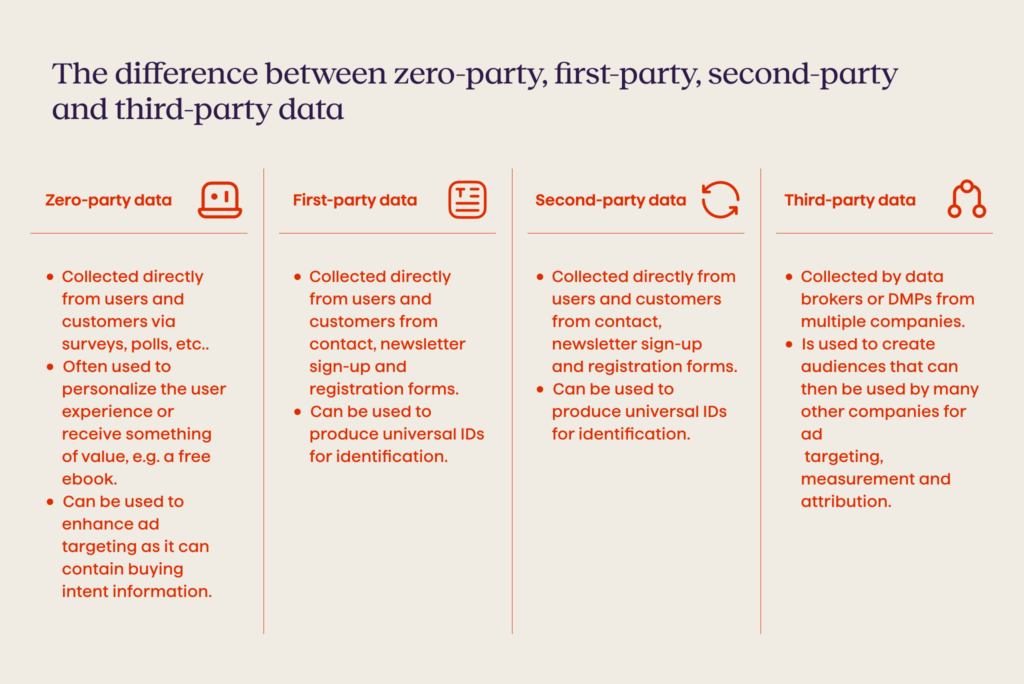
- Zero-party data is data that customers own and willingly give to brands, for example, to personalize their experience or receive something of value.
- Zero-party data helps match the brand’s offering with the current customer’s needs and develops the business faster and in the right direction.
- Examples of zero-party data include information obtained from customers via newsletter sign-ups, calculators, quizzes, surveys, etc.
- To collect zero-party data, you need to have privacy and data processing policies that comply with current privacy laws, such as the EU’s GDPR. In the gathering process, you can utilize customer engagement platforms and enrich single customer views (SCV) in your customer data platforms (CDP) or customer relationship management systems (CRM).
- To create audiences for ad campaigns, marketers use zero-party, first-party and third-party data.
- The difference between zero-party and first-party data is that ZPD comes directly from a customer to improve their experiences and, for example, get more personalized recommendations, while first-party data comes directly from the customer from other avenues, such as newsletter sign-ups.
What is zero-party data?
Zero-party data is data that customers willingly give to brands — intentionally and proactively. Generally, users provide companies with their zero-party data to improve their experience on a website or mobile app, such as via polls and surveys. First-party data is collected in various ways, such as via form submissions and web analytics tools.
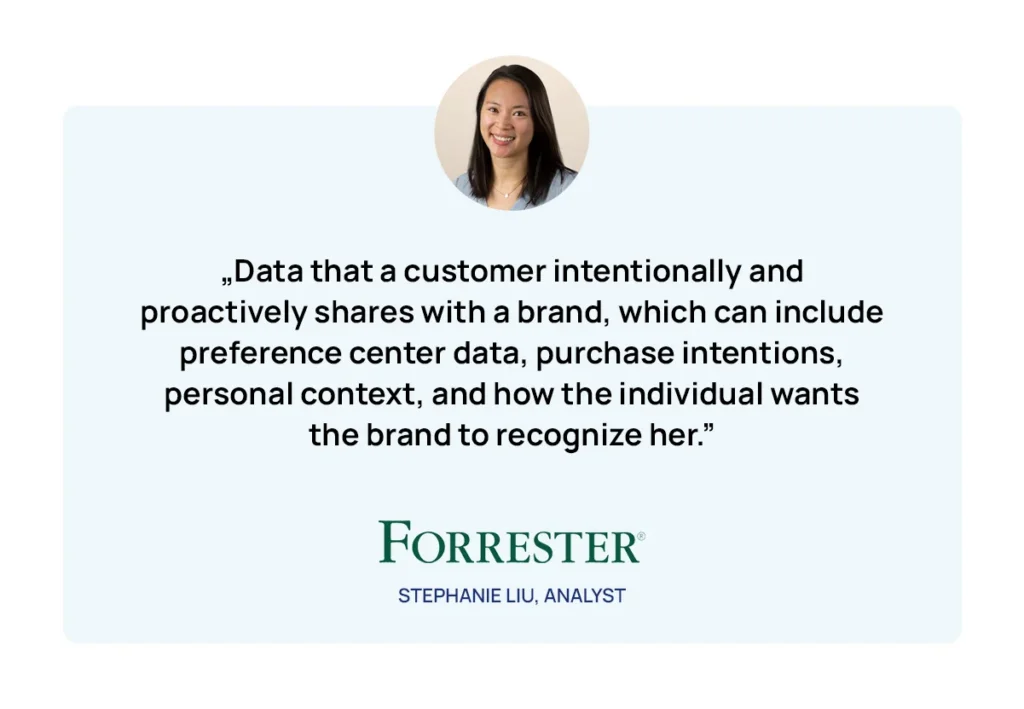
The term “zero-party data” was introduced by Forrester Research to describe information that customers deliberately share with a company. The concept has become increasingly important as data privacy regulations tighten and organizations rely more on data collected through direct customer relationships rather than third-party tracking.
In exchange for sharing their preferences, interests, or goals, customers often receive something of value, such as personalized recommendations, access to premium content, discounts, or educational resources. Because the information comes directly from the customer, zero-party data can help advertisers and marketers better understand current needs and deliver more relevant experiences.
Why is zero-party data important?
As third-party data becomes less accessible and consumers expect greater control over their information, brands need more reliable ways to understand their audiences. Zero-party data fills that gap by providing information that customers choose to share, making it one of the most transparent and actionable data sources available to marketers.
Zero-party data supports several key marketing and advertising activities:
- More trustworthy than third-party data — customers who share their personal information freely with a business and are aware that the information will be utilized for personalization or to improve the user experience are more likely to share honest and helpful data.
- Personalization and customer experience — the customer who is already familiar with or uses services and products of a given brand can submit more information on their preferences to customize recommendations.
- Segmentation — the organization collecting zero-party data can prepare the form in such a way as to obtain the information needed for customer segmentation.
- Data clean room collaboration — companies can share anonymized zero-party data in a data clean room and analyze combined data sets. Based on the analyses, their strategies and activities can be modified. For example, they can prepare a new ad campaign with better targeting criteria.
- Obtaining marketing consent — a potential customer can allow various forms of contact, such as e-mail, telephone, and SMS, when providing their data.
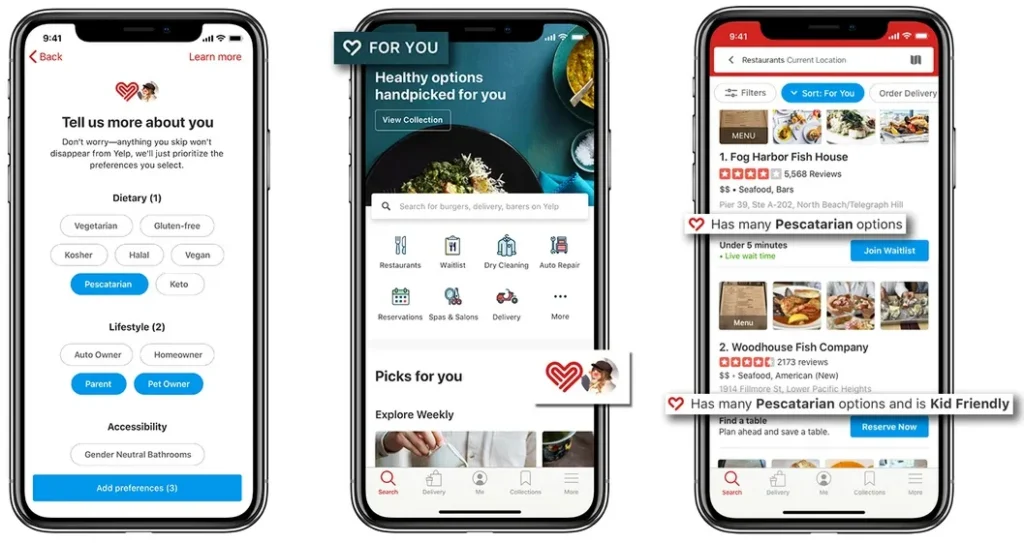
Current trends in the AdTech and MarTech industries are emphasizing the importance of zero-party data. Brands, publishers, and agencies include various data acquisition scenarios in their marketing strategies to obtain more zero-party data.
In the future, brands will need to focus on zero-party data to develop dependable, individualized connections with their customers as consumers’ privacy awareness grows.
Zero-party data examples
There are plenty of tools to collect zero-party data. These can be simple forms next to newsletter sign-ups, calculators, quizzes, surveys — everything in the marketing funnel that helps obtain user information.
In general, brands offer something in exchange for sharing information. Materials that encourage customers to share personal details take various forms as well. These can be free newsletters, e-books, discounts, access to a closed Facebook group, free consultations, better matching of recommended content and items, etc.
How to collect zero-party data?
Collecting zero-party data requires privacy and data processing policies that meet data privacy regulations such as the General Data Protection Regulation (GDPR) in Europe and the California Consumer Privacy Act (CCPA) in the US. Unlike third-party data, which is collected by external data brokers and aggregated from multiple sources, zero-party data is collected directly from the user — but that doesn’t exempt it from regulation.
When drafting these policies, organizations need to answer several questions:
- What personal information is being collected?
- How is the information collected?
- Why is the data collected?
- How is the information used?
- Who will have access to the information?
- What choices do you have?
- Can you review or correct the personal information?
- What security measures are used to protect personal information?
- How long will the organization honor its privacy policy?
- Who is accountable for the organization’s privacy practices?
To collect personal information, brands also need to put these policies in a prominent location, for example, in the footer of their website.
If it comes to tech solutions, to collect zero-party data marketers can utilize customer engagement platforms and enrich their single customer views (SCV) in their customer data platforms (CDP) or customer relationship management (CRM) systems with the zero-party data.
What is first-party data?
First-party data is information collected directly from people who have interacted with a brand, such as customers, website visitors, or app users. Unlike third-party data, which is aggregated by external data brokers, first-party data is collected directly by the brand itself, making it more accurate and exclusive to that organization.
Examples of first-party data include:
- Data about products people have purchased and the value of orders, which is often collected by ecommerce and offline transactions.
- Personal information such as names, postal and billing addresses, email addresses, and phone numbers — often collected by e-commerce and offline transactions.
- Data about people who have created an account with your business, downloaded a digital product (e.g., an ebook) and purchased something from you. This data is often collected by customer relationship management systems. Like with e-commerce data, this often includes names, phone numbers, and email addresses.
- Data about which pages the user has browsed, videos they’ve watched, and other content interactions, which is often collected by website and mobile app analytics.
The sources of first-party data can originate from online and offline activities.
How is first-party data used in programmatic advertising?
First-party data powers audience targeting, measurement, attribution, and analysis in programmatic advertising — advertisers collect it, segment it, and build audiences to convert visitors into customers, upsell existing customers through retargeting, identify which campaigns deliver the best ROI, and gain insights into consumer behavior.
Traditionally, advertisers relied solely on third-party data for audience targeting and measurement, as it was readily available through third-party cookies and data brokers. This kind of third-party data is collected and aggregated by external providers, then sold or shared with advertisers as a third-party audience through a data management platform.
However, the changing privacy landscape and tightening data privacy regulations under the General Data Protection Regulation have made this data much harder to come by. Advertisers, agencies, and publishers have turned their attention to first-party data for key advertising processes instead.
For instance, companies in programmatic advertising use first-party data, such as an email address from a CRM or CDP, to generate a universal ID. This ID is then used to identify that person across the web and show them relevant, targeted ads. Universal IDs are essentially replacing the processes once carried out by third-party cookies, part of the broader end of third-party cookies as a primary targeting tool.
What is second-party data?
Second-party data, or partner data, is data gathered by one company and sold or exchanged to another. Usually, the other company is a business partner with similar audiences.
An example of this kind of partnership is a travel agency and a hotel chain.
The agency and the hotel chain could exchange information and show ads to similar groups of customers, or one of them could hand over the data so the other could target the campaigns to a specific audience.
Second-party data enables companies and advertisers to connect with an additional, untapped set of potential consumers, making it competitive with first-party data as it contains individuals who are either already customers or have indicated a desire to become one.
Why use third-party data, and what is it?
Third-party data is information collected by external organizations and made available to advertisers, publishers, and other businesses. Unlike first-party data, which is collected directly through a company’s own channels, third-party data is aggregated from multiple sources and packaged into audience segments that can be purchased through a data exchange, data broker, or data management platform (DMP). Organizations use third-party data primarily to reach audiences beyond their existing customers.
In the AdTech ecosystem, website owners, app developers, and ecommerce businesses can share audience data with third-party data providers through tracking technologies. Data brokers and data aggregators then combine multiple datasets to create audience segments based on demographics, interests, purchase behavior, income levels, and other consumer data attributes.
The main advantage of third-party data is reach. Because third-party data is aggregated across many data sources, advertisers can target audiences far beyond their existing customer base. This scale made third-party data a cornerstone of programmatic advertising and one of the most widely used types of marketing data.
Examples of third-party data include:
- A user’s browsing history.
- Content interactions.
- Purchases.
- Profile information entered by the user (e.g., gender or age).
- GPS location.
Which type of data is right for your business?
Choosing the right data type depends on your goals, audience, and data strategy. The table below compares zero-party, first-party, and third-party data across transparency, accessibility, competitive value, and reach.
| Zero-Party Data | First-Party Data | Third-Party Data | |
| Relevance and transparency How closely connected is the audience to the advertiser’s target audience and how transparent is the quality of the data? | Zero-party data delivers highly valuable information as it’s directly given from consumers. Zero-party data is directly connected to an advertiser’s target audience. | First-party data is made up of consumers that either are existing customers or who have engaged with a brand or publisher, meaning the audience is usually already part of the advertiser’s target audience. This existing connection is useful for activities like up-selling, cross-promoting, and returning sales. | Because third-party data is collected and aggregated from different sources, the direct connection between an advertiser and user is lost. This means the relevance is often low. Also, most data brokers and DMPs provide little to no transparency over how they create data segments. The risks are that some pieces of data might be outdated or inaccurate because of heavy use of extrapolation and lookalike modeling. However, given the sheer number of data sets, it may provide information that isn’t available with first-party and second-party data, such as purchase preferences and income group. |
| Accessibility How easy is it for an advertiser to collect? | Zero-party data is collected directly from the brand or publisher’s website or app. | First-party data is collected directly from the brand or publisher’s website or app. | Once an integration with a DMP or a data broker has been established, you can buy data sets on demand without the need for additional implementation. |
| Competitiveness What competitive advantage could this type of data provide? | Zero-party data is given directly by potential customers, existing customers or users, so a brand or publisher can utilize it to personalize content and recommendations, create look-a-like audience segments, generate advanced analytics reports and deliver an excellent user experience. | As first-party data is exclusively available to the brand or publisher, it can be used for high-converting activities, such as content and ad personalization. | As third-party data is usually widely accessible, many companies have access to the same pieces of data, meaning third-party data provides less of a competitive edge. |
| Reach How many people could an advertiser reach by using this type of data? | Zero-party data is limited to the group of users that passed their data to the publisher or brand. | First-party data is limited to the visitors of the website (i.e. their online audience) and existing customers (e.g. offline CRM data). | As data brokers and DMPs aggregate data from multiple partners, they have data on almost every user on the Internet. In practice, the audience is many times bigger than first- and second-party data sets combined. |
First-party vs zero-party data: what’s the difference?
The distinction comes down to intent: zero-party data is shared because a customer wants something in return, like a personalized recommendation, while first-party data is collected as a byproduct of an interaction, such as signing up for a newsletter with a name and email address.
This difference in collection affects how the data can be used. Zero-party data tends to improve ad targeting more directly, since it reflects a customer’s stated current needs rather than inferred behavior. For example, if a user completes a survey and indicates they prefer basketball shoes over running shoes, advertisers can use that stated preference to show more relevant ads.
FAQ
Final thoughts
The shift toward privacy-first advertising is changing how organizations collect and use customer data. While third-party data still plays a role in audience targeting, many advertisers are strengthening their first-party data strategies and investing more heavily in zero-party data to improve transparency, personalization, and long-term customer relationships.
Choosing the right type of data depends on your goals, audience, and regulatory requirements. Organizations that build a balanced data strategy today will be better prepared for the future of digital advertising.
Looking to build a privacy-conscious AdTech solution or modernize your data strategy? Get in touch with our AdTech experts.



Your business results matter
Achieve them with minimized risk through our bespoke innovation capabilities. Fill in the form below.