





Cross-functional collaboration: how to build an effective cross-functional team


July 29, 2026 7 min read 495 views
When launching a new product, keeping teams separated by strict departmental boundaries can slow progress and limit innovation. A cross functional team brings together team members from different departments and functional areas to work toward a shared goal, combining diverse perspectives and skill sets.
This approach enables better team collaboration, faster problem-solving, and more creative solutions across the organization. In this article, we explore what makes effective cross-functional collaboration work, the benefits of cross-functional teams, common challenges, and how modern teams use expertise in areas like software development, data, AI, and cloud technologies to deliver successful outcomes.
What is a cross functional team and how does it work?
A cross-functional team connects people from different departments, divisions, offices, and sometimes even companies around a common task or shared objective. By combining different areas of expertise, team members contribute their experience, knowledge, and perspectives to solve problems more effectively and create innovative solutions.
This collaborative approach encourages knowledge sharing and helps teams break down organizational silos. However, bringing together people from different functional areas does not automatically guarantee success — clear goals, effective communication, and defined roles are essential for teams to work together successfully.
What challenges do cross-functional teams face?
Despite their benefits, cross-functional teams can struggle when people from different departments have conflicting priorities, unclear responsibilities, or limited communication. Without clear goals and strong coordination, collaboration across functions can become difficult and slow down decision-making.
According to Harvard Business Review, 78% of organizational leaders experience “collaboration drag,” caused by issues such as unclear decision-making, excessive coordination, and inefficient ways of working. Research on cross-functional teams also highlights common challenges such as weak accountability, unclear governance, and misaligned objectives.
To make cross-functional teams work, organizations need clear objectives, defined roles, and communication processes that allow team members from different functional areas to stay aligned.
How does cross-functional collaboration improve teamwork?
Cross-functional collaboration improves teamwork by bringing together people with different skills, expertise, and perspectives to work toward clear goals. By combining knowledge from different departments, teams can solve problems more effectively, encourage innovation, and create better solutions.
With the right structure, clear communication, and trust among team members, cross-functional teamwork can deliver value beyond day-to-day collaboration. Some of the key benefits include:
1. Cross-functional teams foster innovation
Bringing together people with diverse expertise creates opportunities for new ideas and different approaches. When team members share their knowledge and perspectives, they can challenge assumptions and develop innovative solutions that may not emerge within a single department.
2. They bring fresh perspectives and encourage change
Working with people from different backgrounds and functional areas can introduce new ways of thinking and break routine patterns. This helps teams adapt to new challenges, explore better approaches, and stay open to improvement.
3. They support continuous learning and skill development
Cross-functional work allows team members to learn from colleagues with different expertise and responsibilities. By collaborating across departments, individuals can expand their skill sets and gain a broader understanding of the business.
4. They strengthen communication and collaboration
Cross-functional teams encourage open communication, knowledge sharing, and constructive feedback. By working together regularly, team members can improve collaboration skills and build stronger relationships across the organization.
5. They help teams generate ideas faster
Because each team member brings knowledge of their own area, cross-functional teams can evaluate challenges from multiple perspectives and move from ideas to solutions more quickly. This helps teams make decisions faster and find approaches that better fit project goals.
6. They improve resource utilization
Unlike traditional teams that often rely on sequential workflows, cross-functional teams can distribute responsibilities based on each person’s expertise. This allows organizations to use resources more effectively and reduce bottlenecks during projects.
How to build an effective cross-functional team
Building an effective cross-functional team requires more than bringing together people from different departments. Clear governance, defined responsibilities, and strong collaboration processes help teams stay focused on shared goals and make better use of their combined expertise.
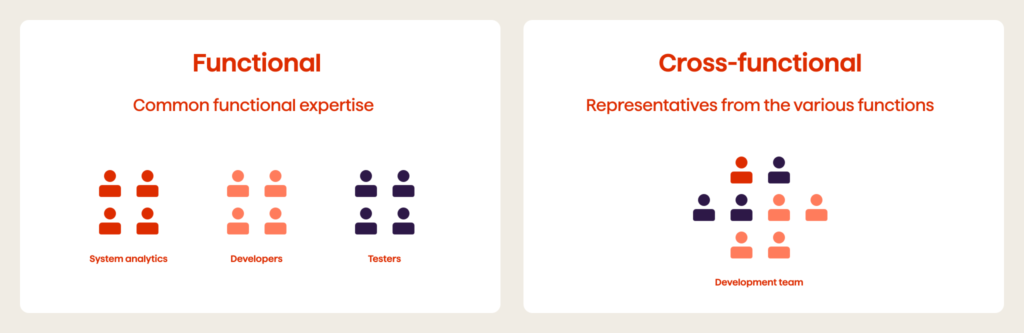
There has to be a top tier of senior managers overseeing cross-functional projects and ensuring that a team sticks to proper project prioritization. They guarantee the effective use of resources while keeping the bigger picture of their project in mind. But as important as clear governance from project leaders is, the main ingredient of your product’s success is a talented and competent team that will do all the heavy lifting. Essentially, there are three key roles on their cross-functional team:
- A product manager who is typically not from an IT field and acts as the CEO of the team
- A lead developer or an engineer
- A UX (user experience) designer
Their teams are free to bring their input and ideas into product development as they are self-governing in finding solutions independently; the leadership team only guides them when setting objectives clear goals and KPIs. By adopting this approach, companies like CarMax have found that it increased feedback, the pace of development, and the process of trial and error to find a solution that works best for the customers. The teams also improved at taking smarter risks and being more creative in meeting their objectives.
The strength and power of a cross-functional team are in clearly defining their responsibilities and giving them the freedom to find solutions. Any issues and disagreements that a product development team may encounter should be resolved at their level, and only if they hit a brick wall the governance team should come as a last resort.
To work and be successful, a cross-functional should reach a common ground and vision. This a strong cross functional team should be a group of people that share a single mindset. To avoid any miscommunication or product delays, it’s essential for the team to “speak the same business language” and establish clear and straightforward processes within the team.
How do cross-functional teams support digital projects?
Modern technology projects often require expertise from multiple areas, making cross-functional collaboration essential. A successful digital solution may involve software developers, data specialists, AI experts, cloud engineers, UX designers, and business stakeholders working together toward a shared goal.
Each role contributes a different perspective and area of expertise. Software engineers focus on building reliable applications, data specialists ensure information can be collected and used effectively, AI experts develop intelligent capabilities, and cloud specialists create scalable and secure environments. By combining these skills, cross-functional teams can solve complex challenges, make better decisions, and deliver solutions that align with both technical requirements and business needs.
This approach is especially valuable when organizations need to introduce new technologies, improve existing systems, or create digital products that require collaboration across multiple disciplines. By working in sync, teams can foster innovation, adapt faster, and build solutions that can grow with changing business needs.
FAQ
Conclusion
The secret to a successful cross-functional team is creating the right environment for people to do their best work. Self-managed teams, continuous professional growth, and a group of motivated people who share the same mindset can turn diverse expertise into real value.
A cross-functional team should never be the goal by itself. It is a way to improve collaboration, use resources more effectively, and deliver better outcomes. The focus should always remain on providing excellent service and creating value for customers.
Discover the value of an integrated, AI-native delivery model. Contact us to discuss your business objectives.



Your business results matter
Achieve them with minimized risk through our bespoke innovation capabilities. Fill in the form below.