






OTT service explained: What is over-the-top, solutions for scalability, and more

July 28, 2026 11 min read 381 views
OTT is everywhere, and the numbers prove it. By 2027, experts expect 4.22 billion people to use OTT platforms, up from nearly 46% of the world’s population in 2023 to over half by 2027. That growth creates enormous opportunities, but it also raises the bar for streaming performance, scalability, and cost efficiency.
If you’ve ever launched an MVP and thought, “Hey, at least it works,” you know what comes next. Peak hours arrive, buffering becomes unmanageable, costs climb as more users join, and what started as a minor delay soon drives people away. At scale, building a reliable OTT platform becomes an engineering challenge.
This guide explores the technologies behind modern OTT platforms, including CDN architecture, edge computing, adaptive bitrate streaming (ABR), and strategies for scaling infrastructure while keeping costs under control. You’ll also learn how observability and personalization contribute to delivering a better viewing experience and supporting long-term growth.
OTT content key takeaways
- Your CDN strategy decides whether you win or lose. When you focus on cache efficiency, origin shielding, and intelligent edge logic, you actually shape the user’s experience—think faster startup, less buffering—way more than any minor app fix ever could. Plus, you keep costs in check as you grow.
- Adaptive bitrate streaming is the real boss behind the scenes. If you nail your ABR ladder and tune your player correctly, you protect quality on any screen—mobile, Wi-Fi, CTV, or whatever—without blowing through bandwidth or compromising your caches.
- The best kind of growth doesn’t come from grabbing new users, but from keeping the ones you have. Sharper discovery, more innovative personalization, and solid lifecycle strategies extract more value from your content and reduce churn.
- Observability puts you in the driver’s seat. When you track QoE, player errors, cache hits, and origin health all together, you stop guessing and start knowing. Suddenly, it’s obvious if the problem lies in your player, your CDN, your packaging, or the backend. And you fix it—fast.
What is OTT?
OTT (over-the-top) refers to delivering video and other media directly over the internet instead of through traditional cable or satellite providers. Popular OTT services include subscription, ad-supported, and live streaming platforms that viewers can access on connected TVs, mobile devices, computers, and other internet-enabled devices.
For a more detailed explanation of OTT technology, distribution models, and how it compares with traditional TV broadcasting, read our guide: What is TV advertising?
The baseline OTT network: what OTT broadcasting actually needs
Building an OTT platform means delivering a TV-quality viewing experience over the public internet, where you have no control over the connection between your infrastructure and the viewer. Instead of relying on dedicated cable networks or set-top boxes, OTT providers must design systems that can handle changing network conditions, diverse devices, and unpredictable traffic while maintaining reliable playback.
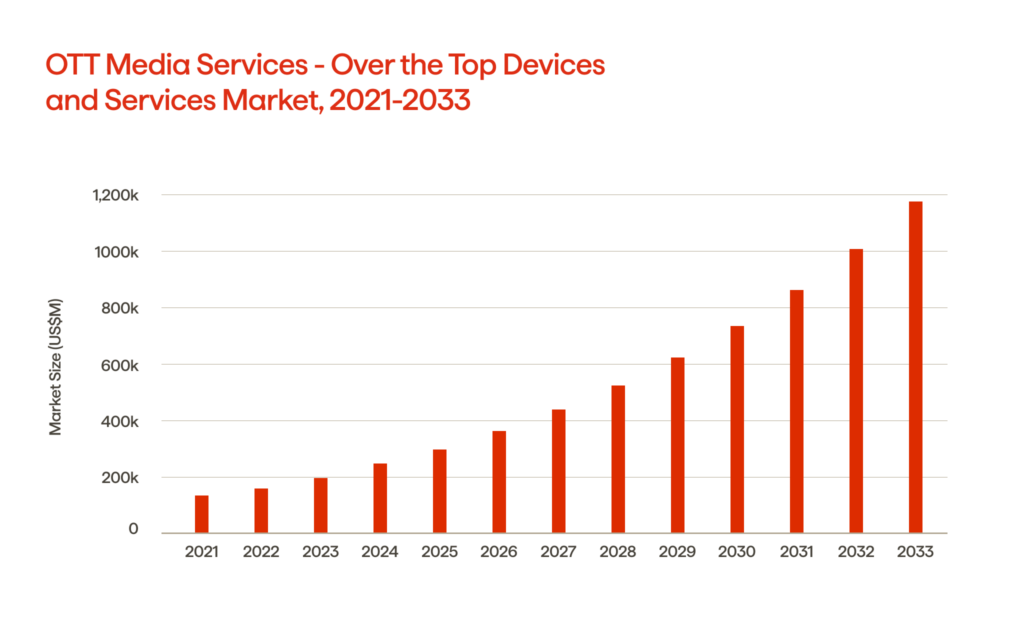
As OTT adoption continues to grow, these challenges become even more complex. The global OTT streaming services market reached $242 billion in 2024 and is projected to expand at nearly 19% annually through 2033. That growth brings more viewers, devices, geographic markets, and traffic spikes during major events, leaving little room for buffering or service disruptions.
To deliver a reliable OTT broadcasting platform, you need two core layers. First is the delivery path, which ensures video reaches viewers efficiently. Second is the control plane, which manages authentication, content access, and playback policies. Together, they form the foundation of a scalable OTT architecture.
Delivery path: the video pipeline (what viewers feel)
This is your over-the-top distribution “supply chain”: get video in, make it streamable, and push it close to the audience.
| Component | What it’s responsible for | The decision that changes everything |
|---|---|---|
| Ingestion | Bringing in VOD uploads or live feeds for live streaming | Redundancy/failover strategy (backup encoders, secondary feeds) |
| Transcoding + packaging | Creating renditions and stream outputs (HLS/DASH) | ABR ladder + codec choices (quality, latency, device reach, cost) |
| Origin | Serving manifests/segments to the edge | Origin shielding + cache-friendly URLs (protect backend from spikes) |
Delivery path: distribution at scale (where performance is usually won)
This is where OTT broadcasting becomes “TV-grade”: fast startup, fewer stalls, stable quality under load.
| Component | What it’s responsible for | The decision that changes everything |
|---|---|---|
| CDN | Getting content close to users and absorbing peak traffic | Cache strategy (keys/TTL/purges) + single vs multi-CDN approach |
Control plane: what turns video into a real media service
These systems don’t move bytes as much as they define rules, and those rules can either help or hurt delivery performance.
| Component | What it’s responsible for | The decision that changes everything |
|---|---|---|
| Identity + entitlements | Who can watch, where, and on which plan/device | Where auth happens (edge vs origin) and token design |
| DRM / tokenization | Content protection without wrecking startup time | Security model that stays cache-aware |
| Catalog + analytics | What users see + how you measure QoE and failures | QoE metrics + error taxonomy (so you can actually troubleshoot) |
How CDN architecture and edge computing improve OTT performance
A content delivery network (CDN) is one of the biggest factors behind a fast, reliable OTT experience. By bringing content closer to viewers and processing requests at the network edge, CDNs and edge computing reduce latency, minimize buffering, and help streaming platforms perform consistently at scale.
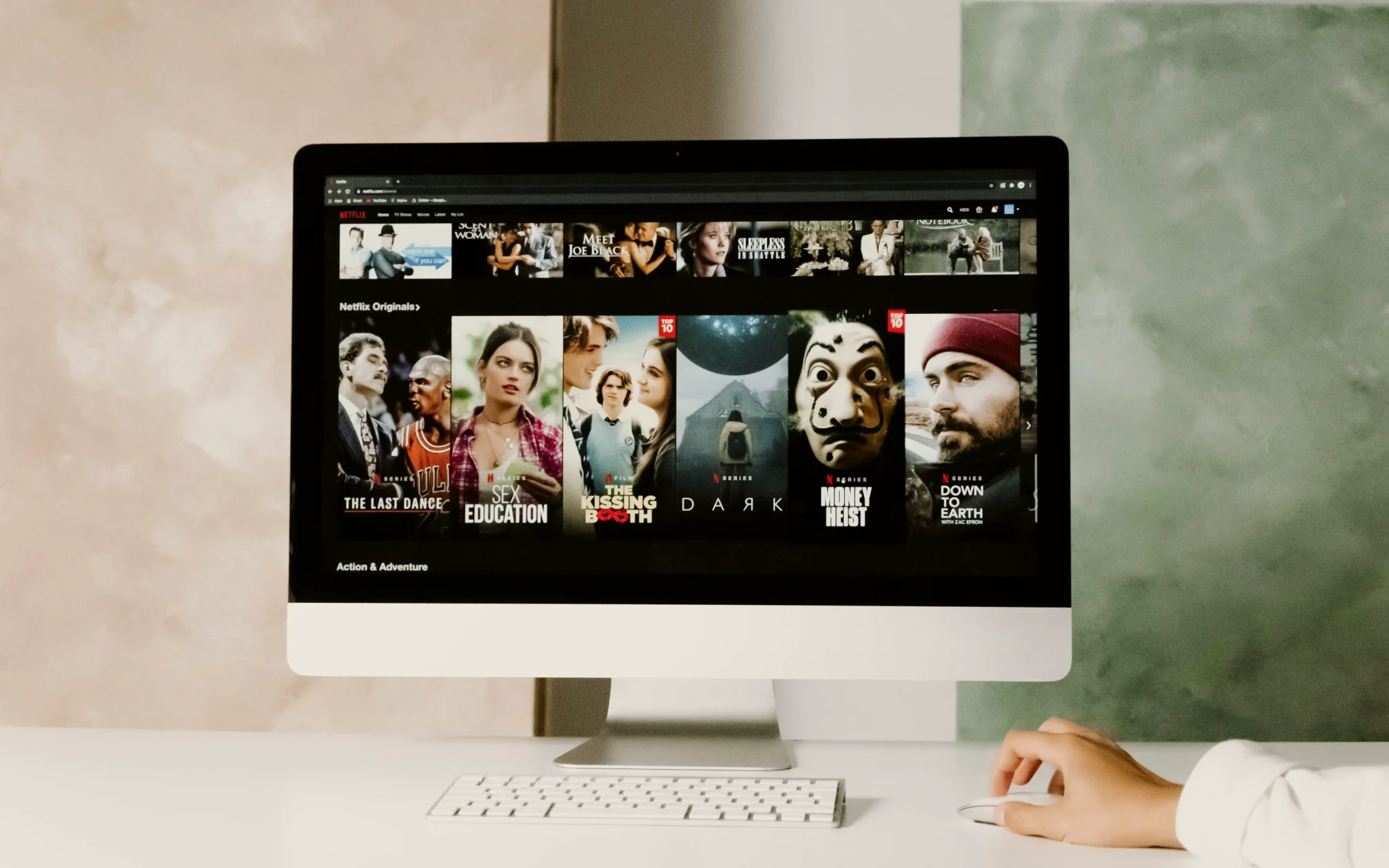
Take Netflix. The reason everyone thinks of it as fast and reliable isn’t just because the apps look good. It’s all about how they handle distribution. For any video streaming platform today, your CDN is what turns traditional TV service into something people can actually count on, especially when you’re dealing with subscribers who won’t stick around if their streams keep stalling.
Here’s the deal: keep your videos as close to viewers as possible. Think edge POPs. Make sure your cache actually works by using clean cache keys and setting reasonable TTLs. And don’t forget to shield your origin, so your backend doesn’t get hammered every time there’s a cache miss. Edge computing steps in here, letting you make smarter calls right at the edge. You can validate tokens, route users to the fastest region, or run quick checks that keep your origin from getting overloaded—all without dragging every request back to the main servers.
When these decisions are made correctly, playback performs seamlessly and reliably. When they are not, every new market launch or spike in subscriber growth becomes a test of the platform’s ability to hold up under load.
The right platform. The right revenue model. Built with custom software and tailored services suited to your business.
Adaptive bitrate streaming technology: balancing quality and bandwidth
Think of your CDN as the shortcut that gets your content to viewers in a flash. Then there’s adaptive bitrate, or ABR—that’s what keeps your video content actually watchable once it arrives. ABR is the behind-the-scenes genius of streaming. It subtly adjusts the video quality as conditions change. Maybe your Wi-Fi is acting up, your mobile signal is shaky, or someone else at home is hogging the bandwidth with gaming or video calls.
ABR doesn’t pick just one “best” stream and stick with it. Instead, your encoder churns out a set of versions (the ABR ladder), and the player hops between them, depending on bandwidth and buffer conditions. The real challenge is building the right ladder and fine-tuning the player. Go overboard with renditions, and you’ll burn through storage and encoding resources, plus you’ll make caching a headache. However, cutting too many, and your stream either looks lousy on large screens or falls apart on slow connections. When you get it right, ABR nails both quality and cost.
Scalability and cost control
Scaling for OTT providers involves more than just reaching a larger audience; it also entails maintaining profit margins with each new subscriber. It’s simple to become engrossed in tracking your infrastructure expenses, such as CDN, encoding, and storage, and neglect churn, which is the actual budget killer.
Churn control starts with retention, and retention has become one of the biggest challenges for OTT providers as the streaming market matures.
Viewers have more options than ever, making engagement, content discovery, and playback quality critical factors in keeping subscribers from switching platforms.
Keeping those viewers engaged starts with the product itself. Cost control in OTT video typically begins with product enhancements that prevent users from canceling, such as improved content discovery, more intelligent “continue watching” features, and personalized recommendations that help viewers find what they want quickly and effectively. McKinsey found that personalization can slash customer acquisition costs by as much as 50% and increase marketing ROI by 10 to 30%. Recent research on Netflix’s recommendation system found that replacing its current recommender with simpler algorithms could reduce user engagement by 4% to 12%, highlighting the role personalized discovery plays in keeping viewers engaged.
When it comes to infrastructure, the approach is pretty straightforward. Boost your CDN cache hit ratio to minimize the need for constant origin pulls. Trim your encoding ladder to avoid wasting space on versions nobody watches. And set up lifecycle policies so old TV content doesn’t clog up your best storage. Do all that, and suddenly scaling stops feeling risky—it actually starts to look like a real strategy.
FAQ
Final words: how to benefit from OTT in 2026
OTT success is mainly dependent on proper setup. If your CDN is dialed in, your ABR actually works in the real world, and you can see what’s going on in your stack, suddenly streaming TV just works. It’s reliable, even during prime time, and works well on a smart TV. That’s what really sets the best services apart. They focus on making the core delivery rock-solid and efficient. It doesn’t matter if you’re running live events, audio streams, or a vast on-demand library like Amazon Prime. The same principle holds: treat performance and cost as two sides of the same coin. When you do that, your platform grows smoothly. No nasty surprises, just steady, confident scaling.
Stay ahead of OTT, satellite television, and media distribution shifts with Avenga. Start a conversation.



Your business results matter
Achieve them with minimized risk through our bespoke innovation capabilities. Fill in the form below.