






OTT advertising: what is over-the-top advertising and how do OTT ads work?

June 30, 2026 6 min read 529 views
Cable television is in decline, seriously losing to streaming media in terms of convenience and reach. OTT viewing has continued to grow as audiences increasingly watch video content across streaming services and connected TV devices.
Consequently, traditional TV advertising can now offer only a fraction of its original reach and appeal. Streaming content is the new television, and with OTT advertising, it may also be the death knell for traditional TV commercials.
What is OTT advertising?
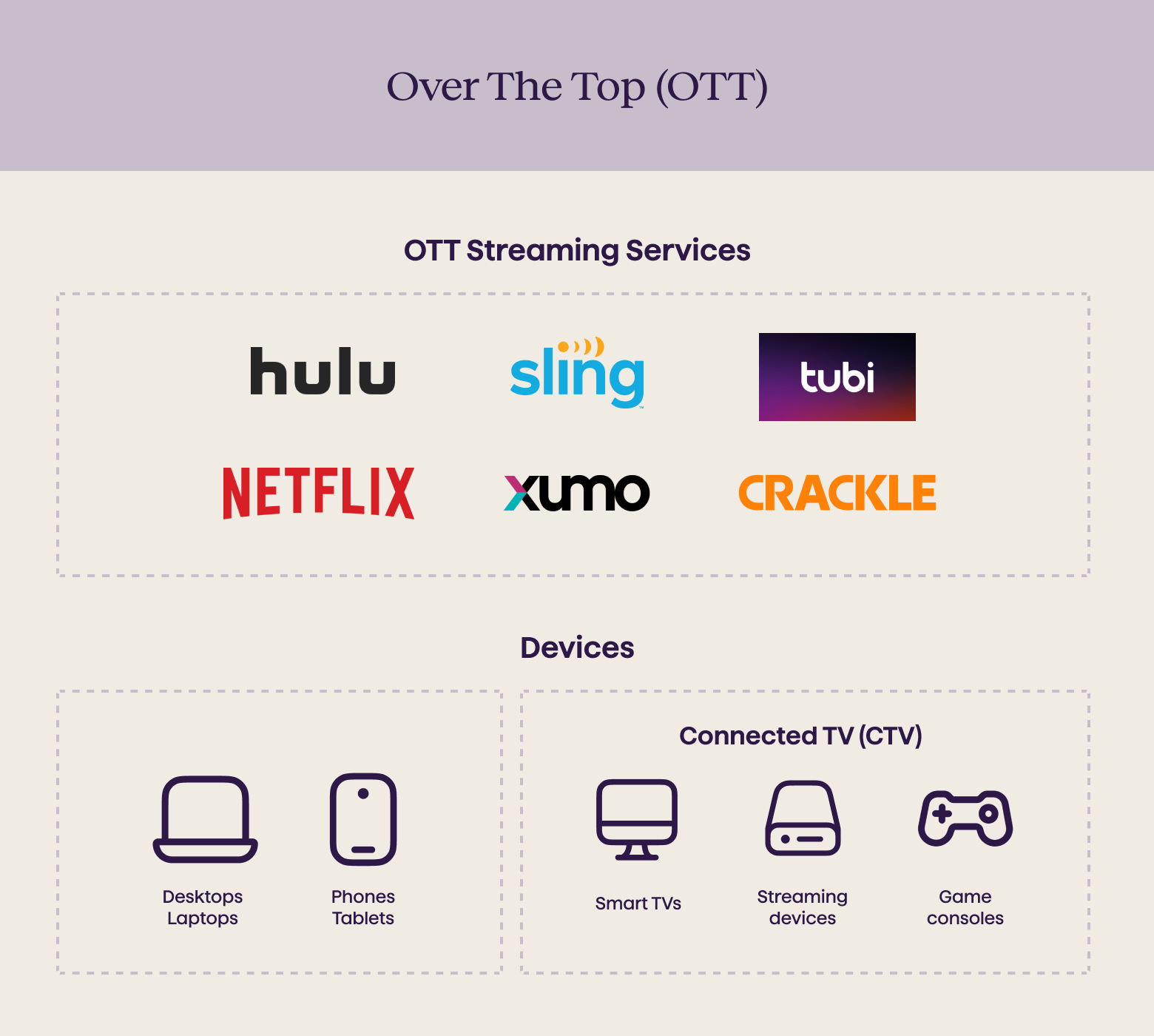
The term over-the-top generally refers to the service used to stream digital content to a TV or similar device. OTT devices include:
- Smart TVs with streaming apps
- Streaming boxes (Apple TV, Android TV, Amazon Fire TV)
- Streaming sticks (Roku, Chromecast, Amazon Fire TV Stick)
- Gaming consoles
- Smartphones and tablets
- Laptops and desktop browsers
OTT advertising is much like traditional TV advertising, but delivered through streaming media on OTT platforms. OTT inventory can be bought directly from streaming platforms or through programmatic advertising platforms, depending on the publisher and available inventory.
OTT and CTV: what’s the difference?
OTT refers to streamed content delivered over the internet through services such as Netflix, Disney+, Hulu, or Amazon Prime Video.
CTV refers to the device used to watch that content. This includes smart TVs as well as devices such as Apple TV, Roku, Amazon Fire TV Stick, and game consoles.
Streaming services are not always ad-free
Hold on – premium subscriptions were once expected to remain ad-free, but that’s no longer the case.
Today, many video on demand platforms offer both ad-supported and ad-free subscriptions. Free streaming services such as Tubi and The Roku Channel remain ad-supported, while regional streaming services continue to offer similar viewing options in many markets.
Benefits of OTT advertising
Streaming has changed where television audiences spend their time. Some viewers have left traditional TV behind, while others move between cable and streaming services depending on what they want to watch.
That gives advertisers more flexibility than traditional television. Instead of showing every household the same commercial, OTT campaigns can deliver different ads based on the audience or the device being used.
Many OTT platforms also support features such as dynamic ad insertion and campaign analytics, although the available functionality differs from one provider to another.
The shift away from traditional television is often described through three audience groups:
- Nevers: People who have never subscribed to traditional television services and primarily watch content through streaming platforms.
- Cord shavers: Viewers who still subscribe to cable or satellite TV but have reduced their packages while increasing their use of streaming services.
- Cord cutters: Viewers who have cancelled traditional television subscriptions altogether in favor of streaming services.
Build scalable OTT advertising solutions with custom AdTech platforms, programmatic technologies, and video advertising services tailored to your business.
Challenges of OTT ads
As evidenced in the previous paragraphs, OTT advertising can offer a number of benefits over traditional TV advertising. However, there is still a number of technological challenges to overcome before OTT advertising can gain traction for good:
- Campaign reports are not identical across every streaming platform.
- Buying inventory often means working with several publishers.
- Streaming apps don’t use browser cookies in the same way websites do.
How does OTT advertising work?
How OTT advertising is delivered mainly depends on two things: where the ad is inserted into the video stream and how the streaming platform communicates with advertising systems. In most cases, OTT advertising relies on Video Ad Serving Template (VAST) and either client-side ad insertion (CSAI) or server-side ad insertion (SSAI).
The general delivery process of OTT ads is as follows:
- Audience selection: The streaming platform builds an audience using subscriber information and, where available, additional first-party or household-level data.
- Campaign delivery: The selected audience is matched with available inventory before the campaign is delivered across supported OTT services and devices.
- Ad playback: Depending on the platform, OTT devices communicate using standards such as VAST to request and display the appropriate advertisement.
- Reporting: Once the campaign has been delivered, the platform records ad impressions and campaign performance before generating reports for advertisers.
Types of OTT ad-insertion
Client-side ad insertion (CSAI)
With CSAI, the viewer’s device loads the advertisement during playback. Because everything happens on the device itself, buffering or playback interruptions are more likely than with server-side delivery.
Server-side ad insertion (SSAI)
With SSAI, the ads are added to the video stream before playback begins. The viewer receives one continuous video stream instead of separate content and advertising files, which usually results in smoother playback.
Some interactive features and additional measurement capabilities may still require client-side technologies, depending on the platform and advertising format.
Advantages of server-side ad insertion in OTT
Compared with client-side delivery, server-side ad insertion offers several practical advantages:
- Smoother playback with fewer interruptions between content and advertising.
- Better resistance to ad-blocking technologies.
- More consistent playback across different OTT devices and streaming platforms.
Tags used for communicating with OTT devices
VAST Tags
VAST (Video Ad Serving Template) provides standardized instructions for the video player about how to handle a video ad – how it should show up in the player, how long it should display, if the user can skip it, where the ad is located (the ad server information), etc.
VPAID Tags
Video Player-Ad Interface Definition (VPAID) played an important role in adding interactivity and measurement to video advertising. Today, many OTT platforms rely on newer measurement and verification technologies instead, while VAST remains the dominant standard for video ad delivery across most OTT environments.
FAQ
The future of OTT advertising
Streaming has changed television advertising as much as it has changed television itself. For advertisers, OTT has become another channel to plan, buy, measure, and optimize alongside search, social media, and display advertising.
Our AdTech development teams can work with you to design, build, and maintain custom OTT advertising platforms for programmatic advertising. Get in touch.



Your business results matter
Achieve them with minimized risk through our bespoke innovation capabilities. Fill in the form below.