





AI in manufacturing: How artificial intelligence is used in manufacturing, key use cases, and automation

September 7, 2026 11 min read 244 views
A production line can create thousands of signals every minute.
A motor starts vibrating differently. Cycle time increases by two seconds. A camera catches a surface defect. Material demand rises unexpectedly. An experienced operator may notice one of these changes. AI can compare all of them at once.
This is where AI in manufacturing becomes useful.
The technology can analyze production data, sensor readings, images, maintenance records, demand forecasts, and process conditions to detect problems earlier. AI is transforming manufacturing by moving some decisions from scheduled checks toward continuous analysis.
Adoption, however, remains uneven. Deloitte reported in 2025 that 29% of manufacturers were using AI or machine learning at the facility or network level, while 24% had deployed generative AI at that scale. Another 23% were piloting AI or machine learning, and 38% were piloting generative AI.
The opportunity is not to automate every factory decision. It is to identify where AI and automation can improve quality, equipment reliability, production planning, and decision-making without separating technology from the people running the plant.
AI in manufacturing: Key takeaways
- Predictive maintenance is one of the strongest AI use cases. Sensor and machine data can help teams identify equipment problems before a failure stops production.
- AI-driven quality control can inspect more products consistently. Computer vision can flag a defect in real time and help quality teams focus on exceptions.
- AI can support production planning. Models can compare demand, capacity, inventory, materials, and equipment availability.
- Digital twins allow manufacturers to test changes virtually. Teams can simulate new settings, layouts, or production schedules before changing the physical process.
- Generative AI can support frontline workers. It can search manuals, summarize maintenance history, and prepare troubleshooting guidance.
- AI adoption depends on data and people. Manufacturers need strong data quality, connected IT and OT systems, cybersecurity, and workers who know when to question the output.
Successful AI should change a measurable manufacturing outcome, not simply add another dashboard.
How is artificial intelligence used in manufacturing?
Artificial intelligence in manufacturing combines several technologies rather than one universal AI system.
Machine learning identifies patterns in historical and real-time data. Computer vision examines images. Natural language processing works with manuals and reports. Generative AI creates or summarizes information. Optimization methods compare possible schedules, production settings, or resource allocations.
AI used on a factory floor may therefore look very different from AI used in an office.
| AI capability | Manufacturing use |
|---|---|
| Machine learning | Failure prediction, process forecasting |
| Computer vision | Quality control and defect detection |
| Digital twin | Production simulation and scenario testing |
| Generative AI | Troubleshooting, manuals, work instructions |
| Optimization | Scheduling, inventory, energy, and capacity |
| AI agents | Multi-step workflows with defined permissions |
The power of AI comes from combining these technologies with manufacturing process knowledge.
A branch of AI that performs well on a public dataset does not automatically understand a particular machine, material, tolerance, or production line.
AI use cases in the manufacturing industry
The best use cases usually sit close to downtime, waste, quality problems, or repetitive work.
Predictive maintenance
Predictive maintenance uses sensor information, machine logs, operating history, and AI algorithms to estimate when equipment behavior begins moving away from normal conditions.
AI can analyze:
- Vibration
- Temperature
- Pressure
- Speed
- Torque
- Electrical load
- Error logs
- Maintenance history
Instead of replacing a component every six months, a maintenance team can use AI to determine whether the equipment actually shows signs of deterioration.
McKinsey noted that generative AI can also support maintenance by summarizing technical knowledge, preparing troubleshooting steps, and helping less experienced workers resolve routine problems. One example in its 2025 analysis reduced unscheduled downtime by as much as 90% and lowered maintenance labor costs by one-third.
The model should help technicians act earlier, not hide the evidence behind a failure score.
AI-driven quality control
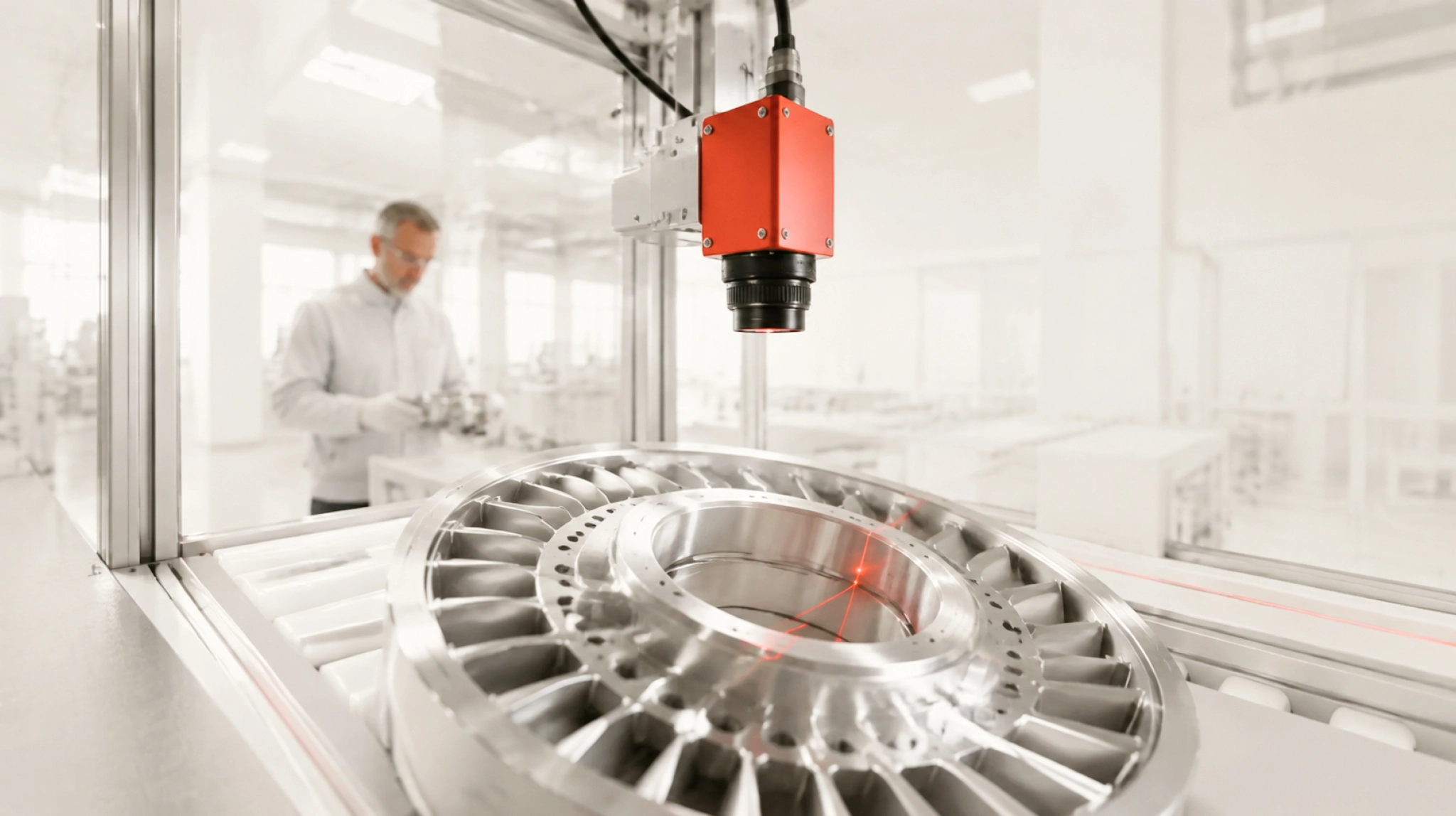
Quality control is another strong application of AI in manufacturing.
Computer vision systems can inspect a product or component and identify scratches, incorrect dimensions, assembly errors, missing parts, contamination, or other quality problems.
AI analyzes images much faster than manual inspection when the production process generates a high volume of similar products.
A 2025 research paper applied machine learning to semiconductor manufacturing data to predict process-control problems before they occurred. The approach combined time-series forecasting with statistical process control so engineers could identify future warning or critical conditions earlier.
AI-driven quality control is most useful when the quality assurance team can trace a defect back to the relevant process conditions.
The goal is improved quality control, not automatic rejection without context.
Production planning and process optimization
Manufacturing companies constantly balance demand, labor, materials, machine capacity, maintenance windows, and delivery commitments.
AI to optimize production can compare far more combinations than a planner can evaluate manually.
AI could support:
- Production scheduling
- Bottleneck prediction
- Changeover planning
- Material allocation
- Energy consumption
- Staffing
- Inventory
- Order prioritization
AI can help optimize production by identifying where one change creates problems somewhere else.
This is also where AI connects with supply chain management. A delayed material shipment can change production planning, inventory, procurement, and customer delivery at the same time.
Avenga’s data services can support the data architecture required to connect production, asset, planning, and supply information.
A production recommendation is only as useful as the data behind it.
Digital twin simulation
A digital twin represents a physical asset, line, factory, or production process using data and simulation.
Manufacturers use AI with digital twins to test scenarios before applying them to physical operations.
A team might ask:
- What happens if production speed rises by 5%?
- Which machine becomes the bottleneck?
- How does another product mix affect throughput?
- What happens to energy use?
- How does maintenance downtime affect output?
This allows AI to create recommendations without using the physical plant as the experiment.
Digital twins also support product design by helping teams test design changes and manufacturing constraints before physical prototypes are complete.
Generative AI and frontline work
Generative AI can support workers who need information rather than another prediction.
An operator can ask why a machine repeatedly stops after a specific alarm. The AI system can search equipment manuals, maintenance records, troubleshooting guides, and previous incidents.
Generative AI could then prepare possible causes and approved diagnostic steps.
This allows human workers to focus on more complex troubleshooting instead of searching through hundreds of pages of technical documentation.
AI also helps preserve knowledge when experienced employees retire or move to other roles.
Natural language processing and large language models can make that knowledge easier to retrieve, but the source material should remain visible so operators can verify the answer.
AI agents and automation
Traditional automation follows predefined instructions. AI can interpret changing conditions before deciding which approved step comes next.
An AI agent could detect an equipment issue, gather sensor history, retrieve maintenance instructions, check parts inventory, and prepare a work order.
Avenga’s agentic AI services support multi-step AI workflows, tool integration, authority limits, and human approval.
AI and automation work best together when the system knows where its authority stops.
Put AI into production, maintenance, quality, and planning workflows with clear engineering ownership.
Benefits of AI for manufacturing
The benefits of AI become clearer when manufacturers measure factory outcomes rather than model performance alone.
AI can support:
- Lower unplanned downtime
- Better product quality
- Faster defect detection
- Improved operational efficiency
- More accurate production planning
- Lower waste
- Better energy use
- Faster access to technical knowledge
- More consistent decision-making
McKinsey found in its 2025 survey of more than 100 manufacturing COOs that only about one-third of companies were starting to scale AI. Roughly two-thirds remained in exploration or targeted implementation, and only 2% said AI was fully embedded across operations.
The gap matters.
AI applications may work in a pilot and still fail to scale because existing manufacturing systems cannot share data, workers do not trust the tool, or the implementation process does not connect the model with daily operations.
Challenges when implementing AI in manufacturing
The manufacturing sector brings together physical machines, software, workers, suppliers, and legacy infrastructure.
That creates several barriers.
Poor data quality
A sensor may fail. Machine identifiers may differ across systems. Maintenance logs may be incomplete.
AI can analyze data, but it cannot correct every missing context automatically.
Legacy systems
Existing manufacturing environments often combine modern software with decades-old equipment.
Integrating AI may require connections with manufacturing execution systems, programmable logic controllers, ERP, warehouse systems, and industrial internet of things infrastructure.
Avenga’s product engineering capabilities can support software and platform work around existing manufacturing environments.
Cybersecurity
Connecting more machines and applications creates more attack paths.
Manufacturers need identity controls, network segmentation, monitoring, and security rules around AI integration, especially where an AI system can trigger actions.
Workforce adoption
AI is not automatically a replacement for manufacturing jobs.
In many applications, AI gives operators and engineers additional information while people remain responsible for safety, maintenance, production, and quality decisions.
Manufacturers should design AI around human workers rather than assuming every repetitive task should become autonomous.
How manufacturing companies can adopt AI
Implementing AI works better through a focused sequence.
- Pick one measurable problem. Start with downtime, defect detection, production planning, or another costly issue.
- Measure the baseline. Record downtime, scrap rate, cycle time, quality, or manual effort.
- Prepare production data. Identify sensors, systems, owners, missing data, and update frequency.
- Choose the right method. Use machine learning for prediction, computer vision for images, optimization for scheduling, and generative AI for language-heavy tasks.
- Test with real factory conditions. Include sensor failure, unusual materials, production changes, and edge cases.
- Keep human approval where needed. Safety, quality, maintenance, and major production changes need clear ownership.
- Measure the result before scaling. Successful AI should improve a business or production metric.
Avenga works with organizations through its manufacturing services to connect AI, software, data, and industrial operations.
The future of AI for manufacturing
The future of manufacturing will likely combine automation with AI rather than replace one with the other.
Automation will continue handling stable, repeatable actions. AI will help interpret changing conditions, forecast problems, and support decisions where fixed rules are not enough.
Industry 4.0 already connects machines through sensors, software, analytics, robotics, and the internet of things. AI adds another layer of intelligence across those systems.
AI earns its place in manufacturing when it helps engineers and operators see problems earlier, understand why the system recommends a change, and remain responsible for the final decision. The goal is not a factory without people. It is a factory where people have better information to improve quality, reliability, and output.
Ilias Khan, Senior Vice President of Industrials at Avenga
AI can revolutionize parts of manufacturing, but the future of manufacturing still depends on strong engineering, skilled people, reliable data, and physical production systems.
FAQ
Conclusion: Use AI to improve manufacturing decisions
AI in manufacturing creates value when it connects factory data with a decision people can act on.
Predictive maintenance can identify machine risk earlier. Computer vision can improve quality control. Digital twins can test production changes. Generative AI can help frontline workers find technical knowledge faster.
But AI does not fix weak production processes by itself.
Manufacturers need dependable data, connected systems, clear ownership, cybersecurity, and measurable goals before they scale AI across every aspect of manufacturing.
AI Native Engineering puts AI inside the production process without removing human responsibility.
If you are planning AI for manufacturing, smart factory, quality, maintenance, or production projects, contact Avenga to discuss the engineering approach.


Your business results matter
Achieve them with minimized risk through our bespoke innovation capabilities. Fill in the form below.