






Microsoft Dynamics 365 modules: Key enterprise use cases


June 11, 2026 9 min read 655 views
Dynamics 365 modules can help you break the inertia barrier and unleash hidden business growth.
Microsoft Dynamics 365 is a dynamic segment of Enterprise Resource Planning (ERP) software. Each module within Dynamics 365 serves as a strategic tool tuned to a distinct set of business challenges. The 2024 and 2025 release waves added deep Copilot and Agentic AI capabilities to nearly every module. Autonomous agents now execute core tasks in sales, service, finance, supply chain, HR, and commerce. Copilot sits inside every module, and purpose-built agents handle case triage, supplier communication, collections, scheduling, and contact center conversations end-to-end.
In this article, we will explore the core capabilities of different Dynamics 365 modules and how they help enterprise lead in the AI age.
Dynamics 365 Business Central
Business Central is an enterprise resource planning instrument for companies that want to operate with fewer system handoffs and tighter financial visibility. As a cloud-based ERP solution, it covers functions like financials, sales, projects, supply chain, warehousing, manufacturing, as well as reporting and analytics in one environment. It runs on-premises or in the cloud, which reduces organizational silos and consolidates the operational picture. The module helps SMEs avoid the cost of scaling on-premises infrastructure as the business grows. Business Central also handles day-to-day business operations for small and medium-sized companies under one cloud-based system.
A Forrester TEI study commissioned by Microsoft examined migrations from on-premises Microsoft Dynamics ERP to Business Central across a composite organization of 150 employees and $15 million in annual revenue.
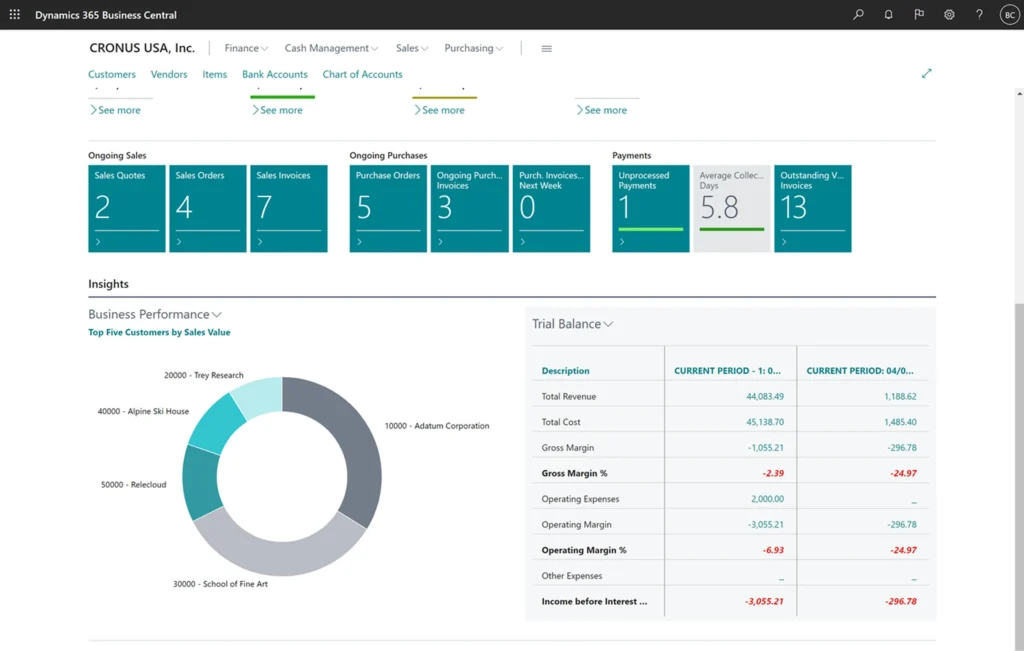
Below is a quick view of the company’s business performance with Business Central (see Figure 1):
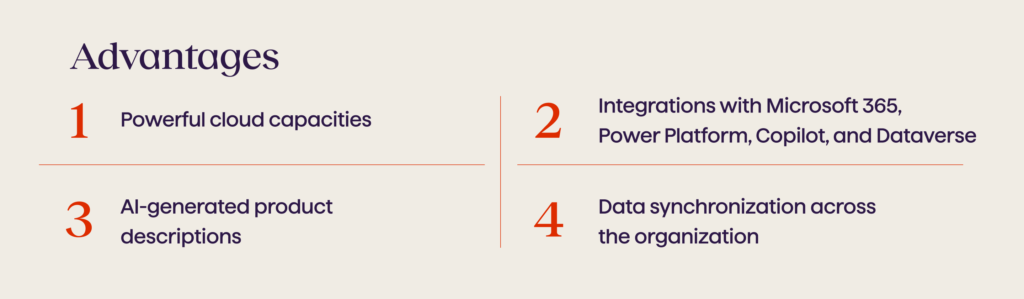
Key benefits include:
Build, modernize, and run mission-critical software with Avenga’s engineering team.
Dynamics 365 Commerce
Dynamics 365 Commerce exemplifies a unified platform for businesses to manage their entire commerce ecosystem. It integrates online and offline channels and provides customers with a consistent experience across various touchpoints, whether they are browsing the website, shopping in-store, or interacting with the call center. With the help of its convenient site-building capabilities, you can optimize customer engagement and thereby enhance sales and conversion rates.
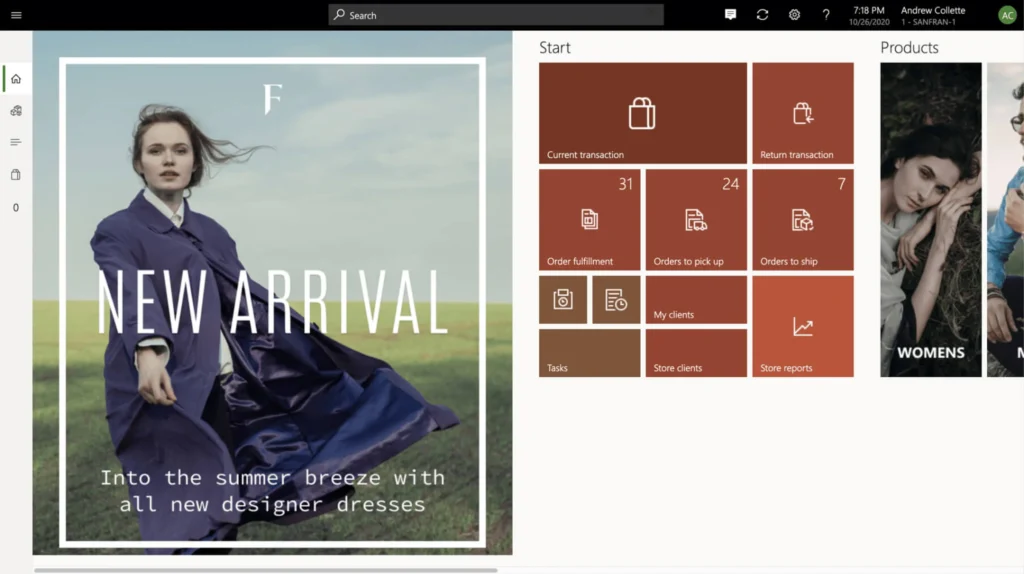
In addition, Dynamics 365 Commerce makes it possible to accumulate and analyze user content such as ratings and reviews and see the bigger picture of customer relationships. AI capabilities now extend into product recommendations, search relevance, and Copilot-assisted site authoring. The application’s capacities offer multiple opportunities to transform digital forefront visits into sales (see Figure 2).
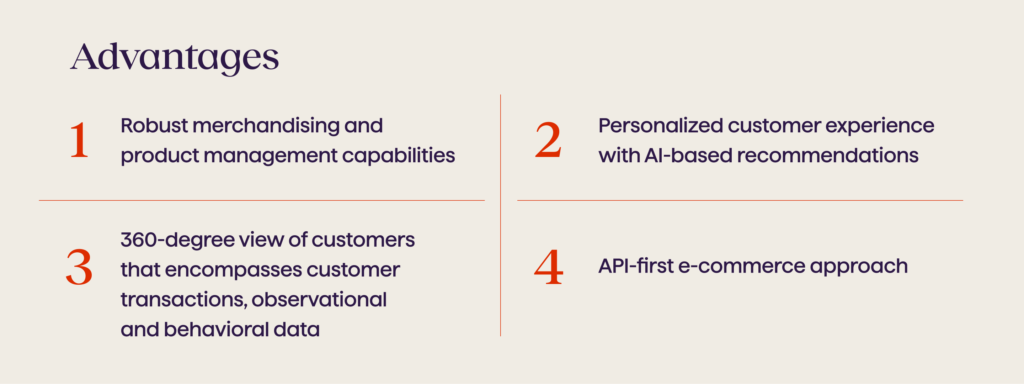
Key benefits include:
Dynamics 365 Field Service
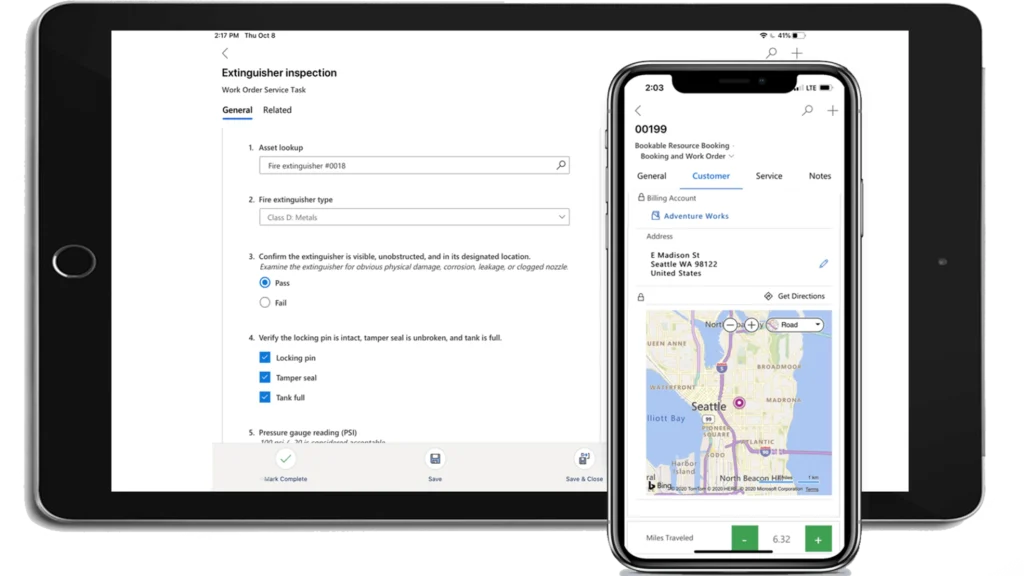
Dynamics 365 Field Service coordinates work order intake, scheduling, technician dispatch, and customer engagement. Self-service portals built on Microsoft Power Platform and Power Virtual Agents handle around-the-clock customer interactions. The mobile application gives technicians on-site access to work order details, asset history, and back-office collaboration tools. Copilot in Field Service summarizes work order history and drafts customer updates. It also helps dispatchers generate schedules based on technician skill, location, and parts availability. Technicians on the mobile app can use Copilot to query asset records by voice and capture service data hands-free (see Figure 3).
Key benefits include:
Dynamics 365 Finance
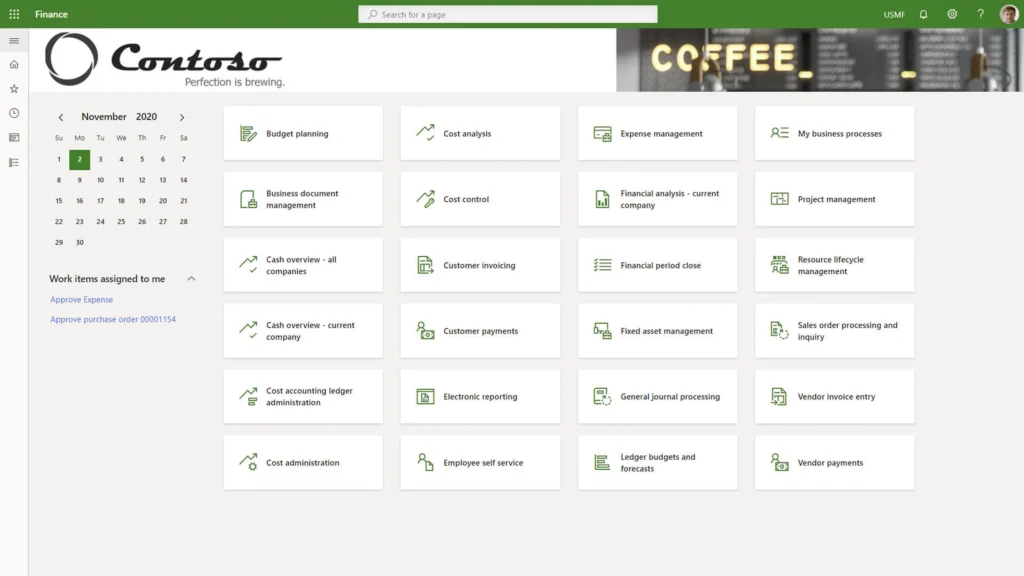
As a powerful enterprise resource planning solution, Dynamics 365 finance and operations help companies refine their financial management. It focuses on business process automation and allows for optimizing and reducing costs. With this module, enterprises can streamline operations across financial processes such as budget planning, cost analysis and control, cash overview, cost accounting ledger administration, fixed asset and human capital management, ledger budget and forecasting, and more (see Figure 4).
This business module is tailored for: large enterprises and medium-sized companies operating in finance, healthcare, manufacturing, retail, or automotive.
Dynamics 365 Human Resources
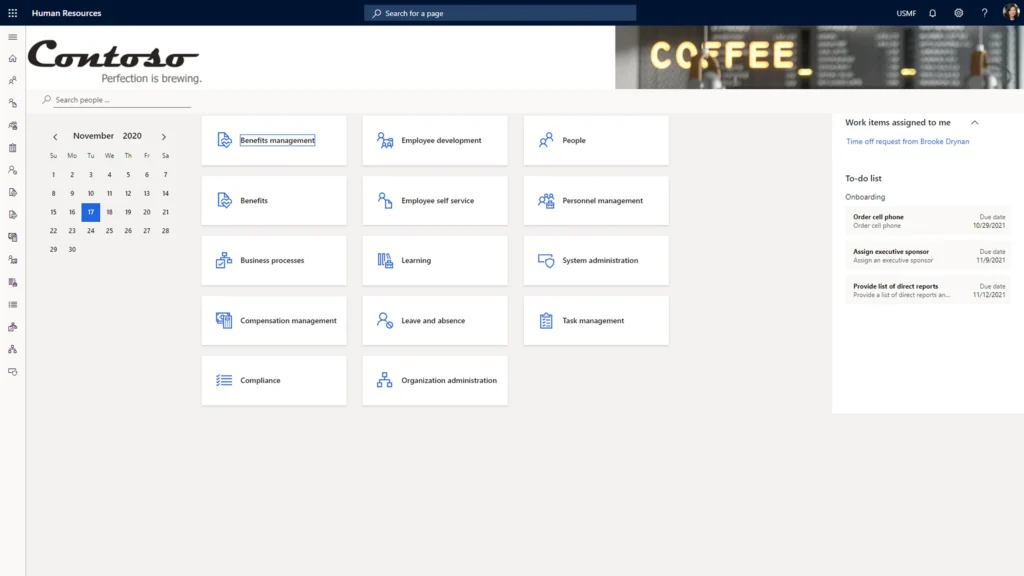
Dynamics 365 Human Resources is a single source of truth for benefits, perks, leave and absence policies, certifications, and compliance programs (see Figure 5). HR teams can collect employee feedback, run engagement surveys, and adjust policies based on workforce data. Copilot drafts job descriptions and suggests interview questions. Employees can also use Copilot to self-serve answers to common HR questions through natural-language queries against the HR knowledge base.
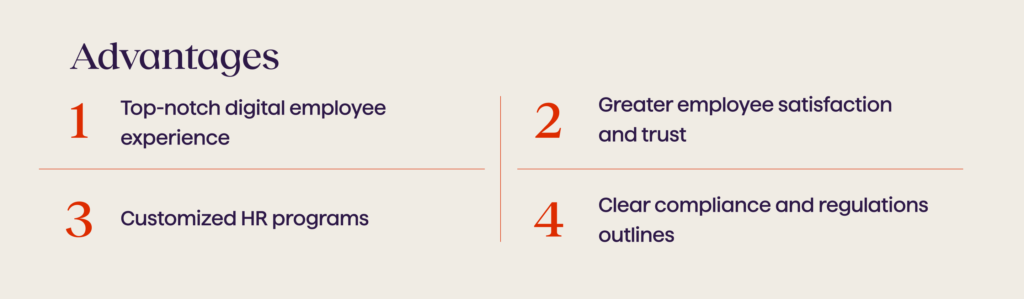
Key benefits include:
Dynamics 365 Sales
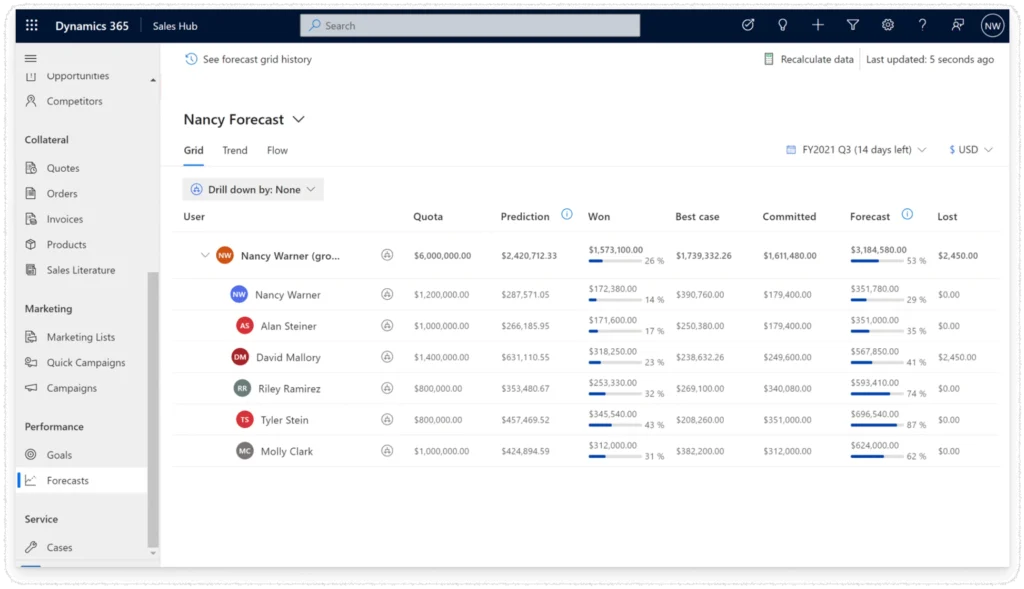
As one of the most widely deployed Dynamics 365 CRM modules, Dynamics 365 Sales gives sellers a full view of each account, including contact information, preferences, past interactions, and purchase history. Built-in intelligence and predictive analytics surface buyer behavior patterns and cross-sell or upsell opportunities based on pipeline data. Copilot for Sales drafts emails and prepares meeting briefs from CRM, Outlook, and Microsoft Teams signals. It also produces post-call summaries with next-step recommendations that move the sales process forward. The sales team can ask Copilot to identify at-risk deals or rank opportunities by likelihood to close (see Figure 6).
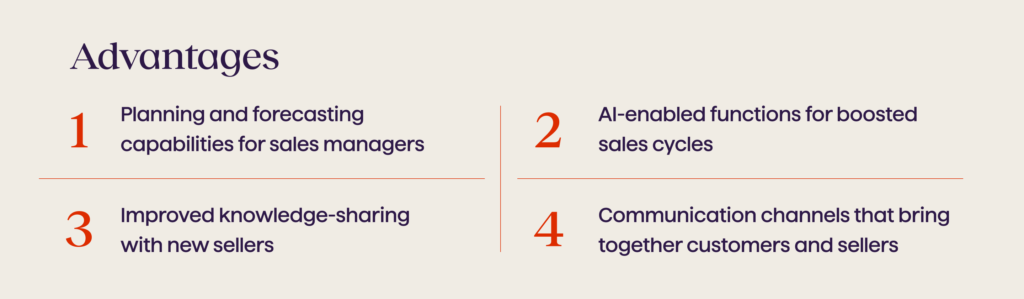
Key benefits include:
Dynamics 365 Project Operations
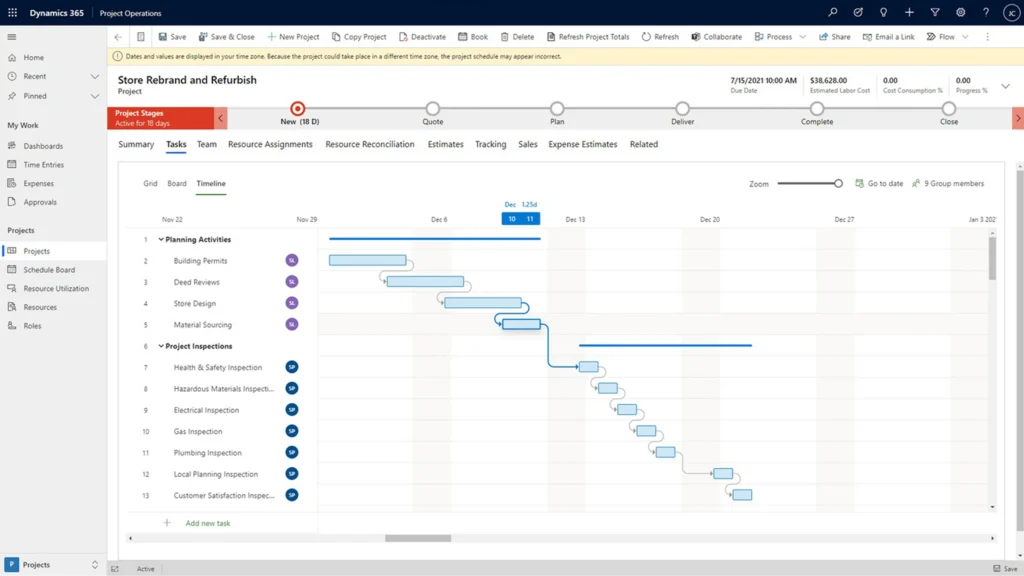
Simplified project management practices are up for grabs with Dynamics 365 Project Operations. This instrument serves as a platform for unified project delivery and offers specialists a comprehensive set of capacities. For example, a business can leverage the Project Operations’ potential to track and estimate progress, foresee trends and tendencies, improve resource allocation, get valuable information on tracking and expense management, etc. (see Figure 7). AI capabilities now include forecast assistance, resource recommendations based on skills and availability, and Copilot-generated project status summaries for executive stakeholders.
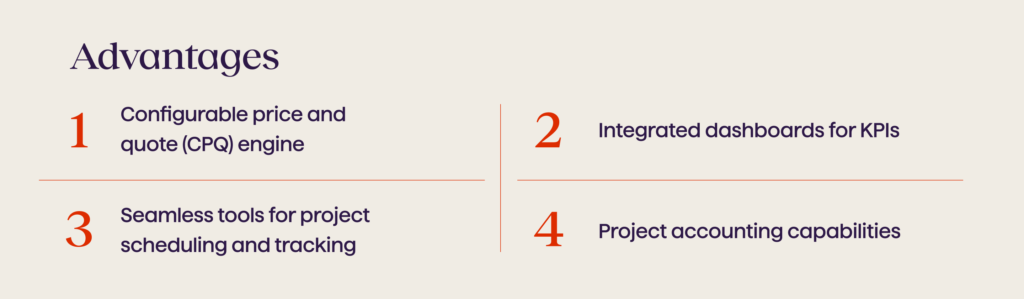
Key benefits include:
Dynamics 365 Intelligent Order Management
Managing an entire order lifecycle with the Dynamics 365 Intelligent Order Management application is made effortless and efficient. This powerful tool seamlessly handles order processing, fulfillment, and tracking from end to end. Hence, companies can automate processes (e.g., order capture), safeguard accurate inventory management, and amplify order routing and fulfillment across various channels.
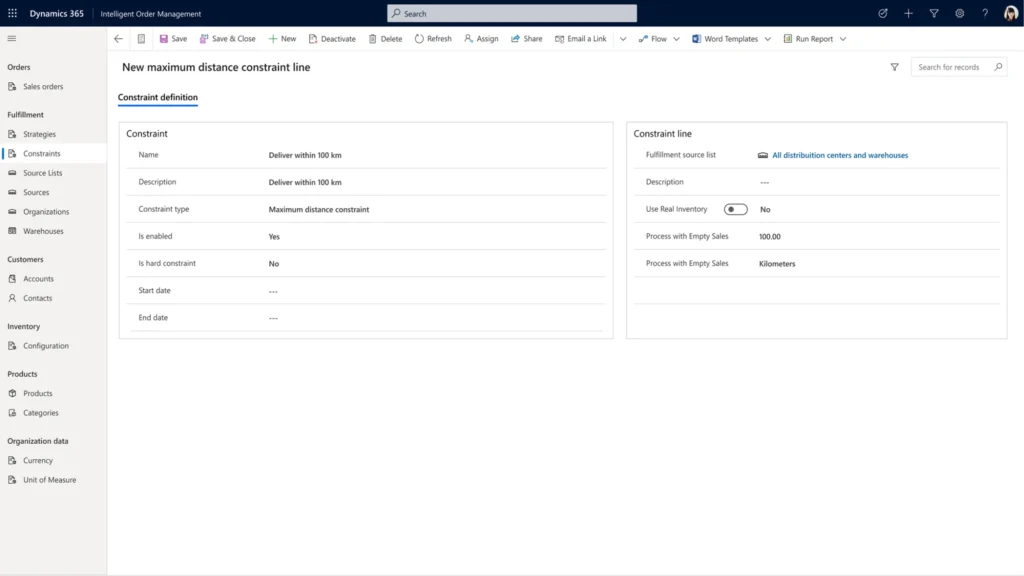
The application can be integrated with multiple systems and platforms, allowing real-time visibility into order statuses, inventory levels, and shipment tracking. It also enables businesses to proactively manage order-related issues and propel customer satisfaction. Below is an interface of Intelligent Order Management that showcases critical components and features, including a constraints menu (see Figure 8):
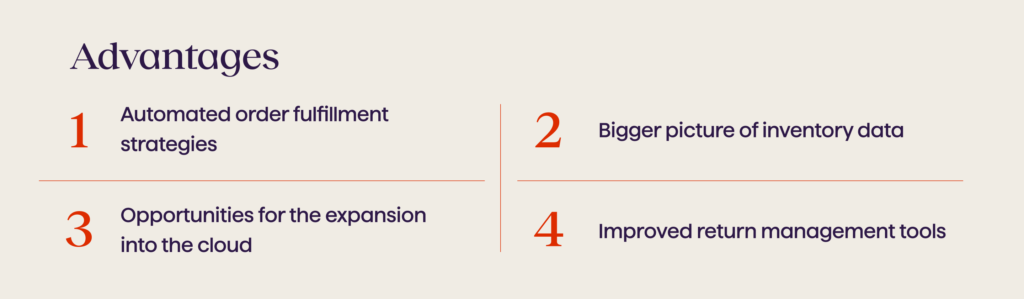
Key benefits include:
Dynamics 365 Supply Chain Management
Building a resilient supply chain is a paramount factor in securing strategic advantages for a company. Dynamics 365 Supply Chain Management offers comprehensive support in this endeavor. From procurement and inventory management to production planning and logistics, this solution provides the tools and insights necessary to reduce operational costs and ensure timely delivery of products or services.
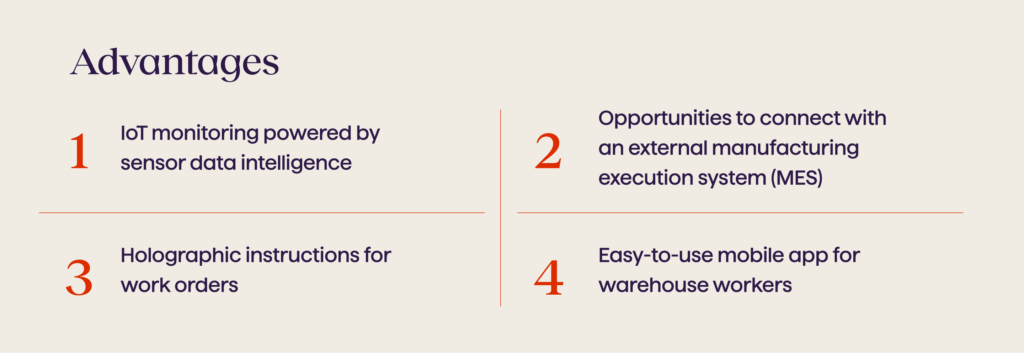
Autonomous AI agents introduced in recent release waves now handle supplier communication, demand sensing, and stock allocation decisions
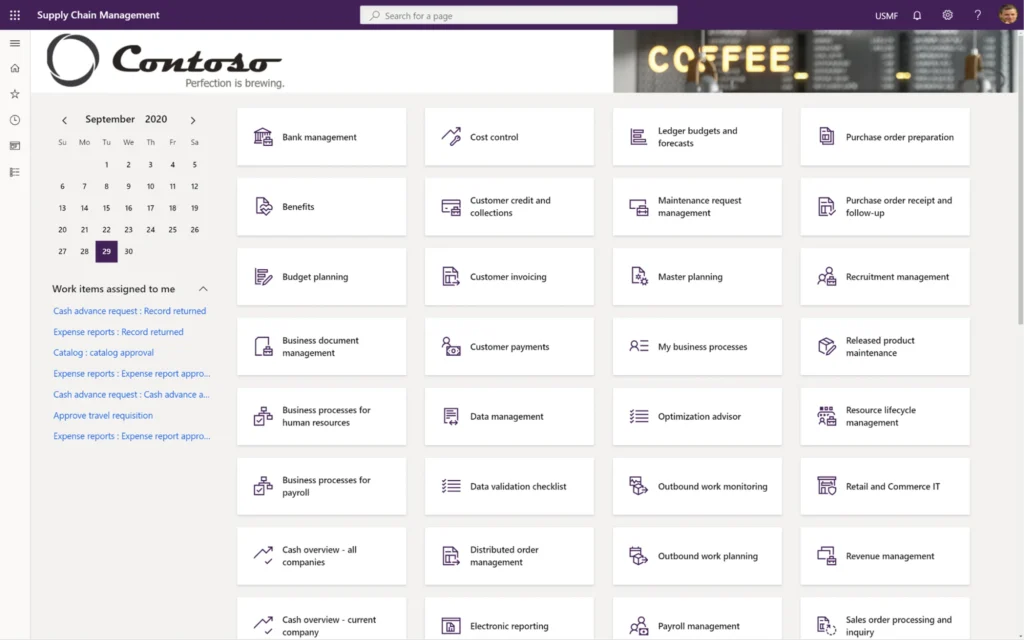
This is an example of the solution’s interface, which reflects a wide variety of opportunities companies can tap into, be it bank management and cost control or outbound work planning and electronic reporting (see Figure 9):
This business module is tailored for: SMEs and large-scale organizations.
Dynamics 365 Customer Service
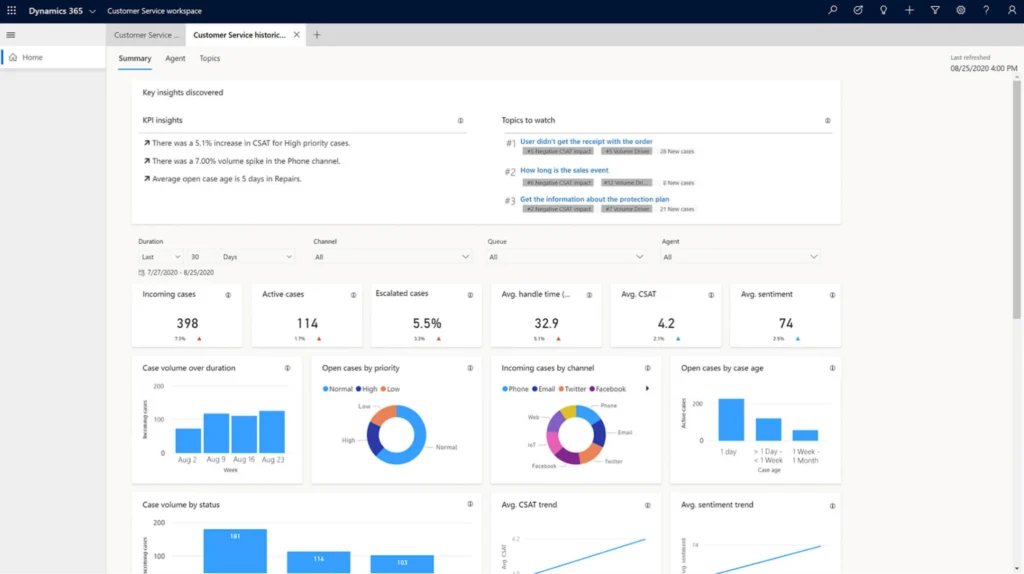
With the Dynamics 365 Customer Service module, providing outstanding service across different channels becomes effortless. The application sits at the operational layer of customer relationship management, letting organizations streamline case management, deploy intelligent routing, and transfuse self-serve with automation, all while delivering personalized service. Here, they can access customer, channel, and conversational analytics. Below is an example of how to deploy Customer Service to discover valuable information about the company’s KPIs, Customer Satisfaction Score (CSAT), and other metrics on customer service interactions (see Figure 10):
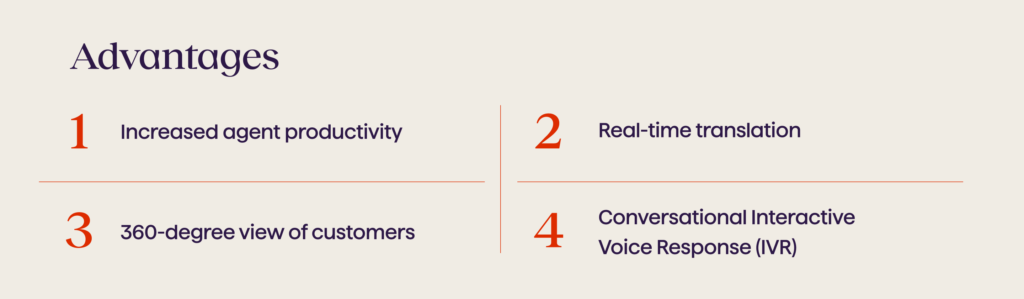
This business module is tailored for: SMEs and large-scale organizations.
Dynamics 365 Customer Insights
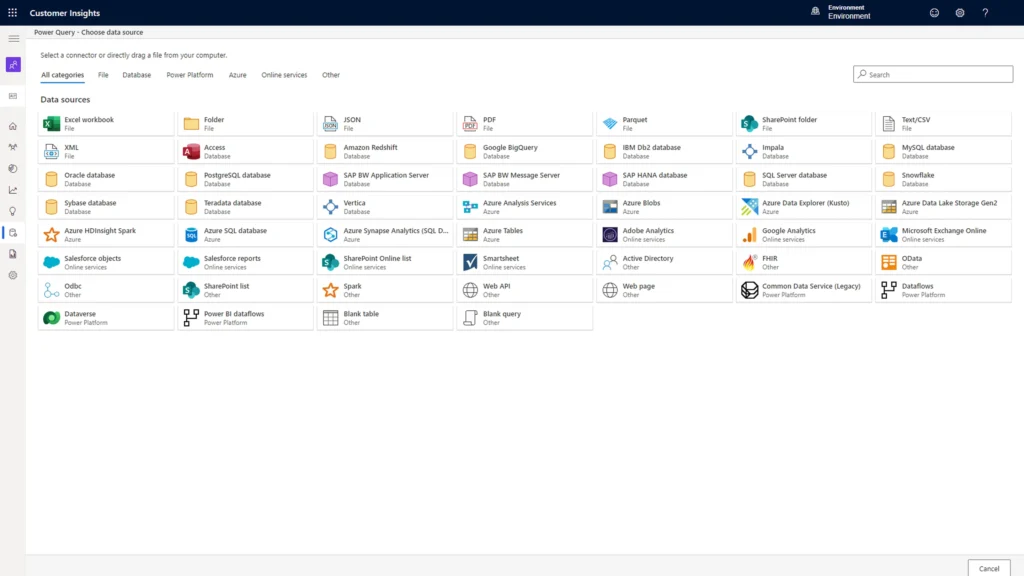
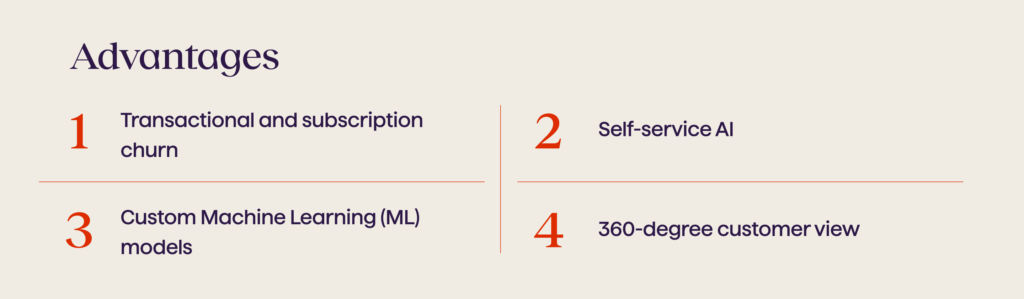
Dynamics 365 Customer Insights aims to consolidate customer data from various sources into a single unified view (see Figure 11). It demonstrates various data points, including purchase history, interactions, preferences, and demographics. The application now also covers what was previously sold as Dynamics 365 Marketing, which Microsoft merged into Customer Insights in 2023. One of the key strengths of Dynamics 365 Customer Insights lies in its seamless integration with other applications such as Marketo, Google Ads, or ServiceNow. Acquiring a bird’s eye view can deliver exceptional service experiences and optimize service operations.
This business module is tailored for: SMEs and large-scale organizations.
Dynamics 365 Customer Voice
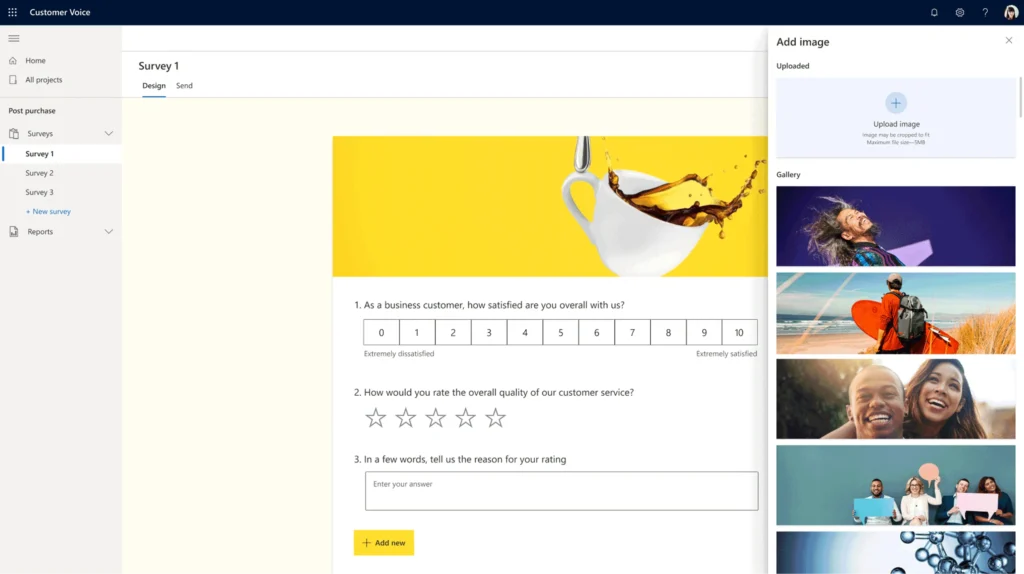
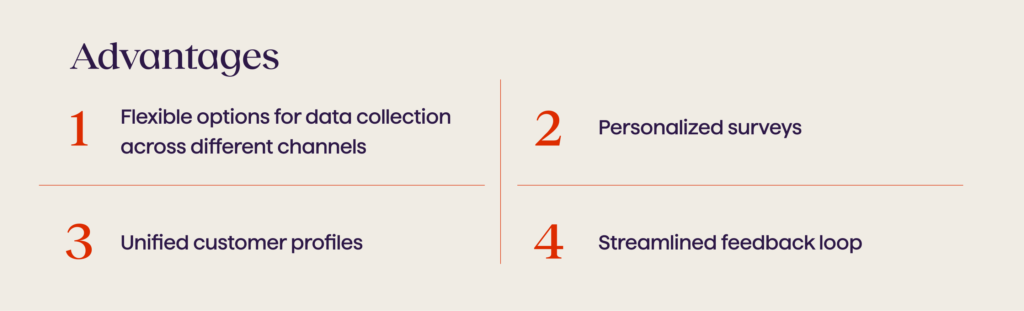
This Microsoft Dynamics solution brings to the forefront customers’ feedback. It helps companies design and distribute surveys in order to collect information at various touchpoints in the customer’s journey (see Figure 12). This application uncovers everything that you could previously pass over – customer sentiment, intricate trends, and unobvious metrics. With Dynamics 365 Customer Voice, the enterprise can capture both quantitative and qualitative feedback, and learn new information from detailed reports and dashboards. As a result, they can act upon customer feedback effectively and build stronger business relationships.
This business module is tailored for: SMEs and large-scale organizations.
Limitations
The Dynamics 365 modules have limitations worth weighing during planning.
Implementation usually requires external support and training because the learning curve might be steep. Companies handle occasional system downtime or technical issues through Microsoft support or a managed service provider. The prebuilt modules cover broad functionality, but some businesses find that niche industry requirements are not fully covered. Customization closes those gaps at the cost of additional development and ongoing maintenance. Scalability issues can also surface for organizations with rapid growth or large jumps in data volume.
These risks are manageable. Comprehensive training programs and an experienced implementation partner shorten the learning curve. A documented contingency plan with the support provider limits disruption when downtime occurs. For specialized requirements, custom development or third-party ISV solutions from AppSource fill the gaps the base platform leaves open. Regular review of scalability requirements and ongoing monitoring of system performance help catch capacity issues on time.
FAQ
Final thoughts
At its core, Microsoft Dynamics 365 represents a versatile platform that empowers companies to automate repetitive tasks and drive sustainable growth across different departments. Copilot and autonomous AI agents now run routine work inside most modules, including finance, service, and supply chain.
Turn Agentic AI into measurable productivity gains across your Microsoft suite. Contact Avenga to start transformation.



Digital transformation in telecom: A complete guide
Your business results matter
Achieve them with minimized risk through our bespoke innovation capabilities. Fill in the form below.