






Public transportation system can actually be convenient with real-time data intelligence

July 21, 2026 10 min read 561 views
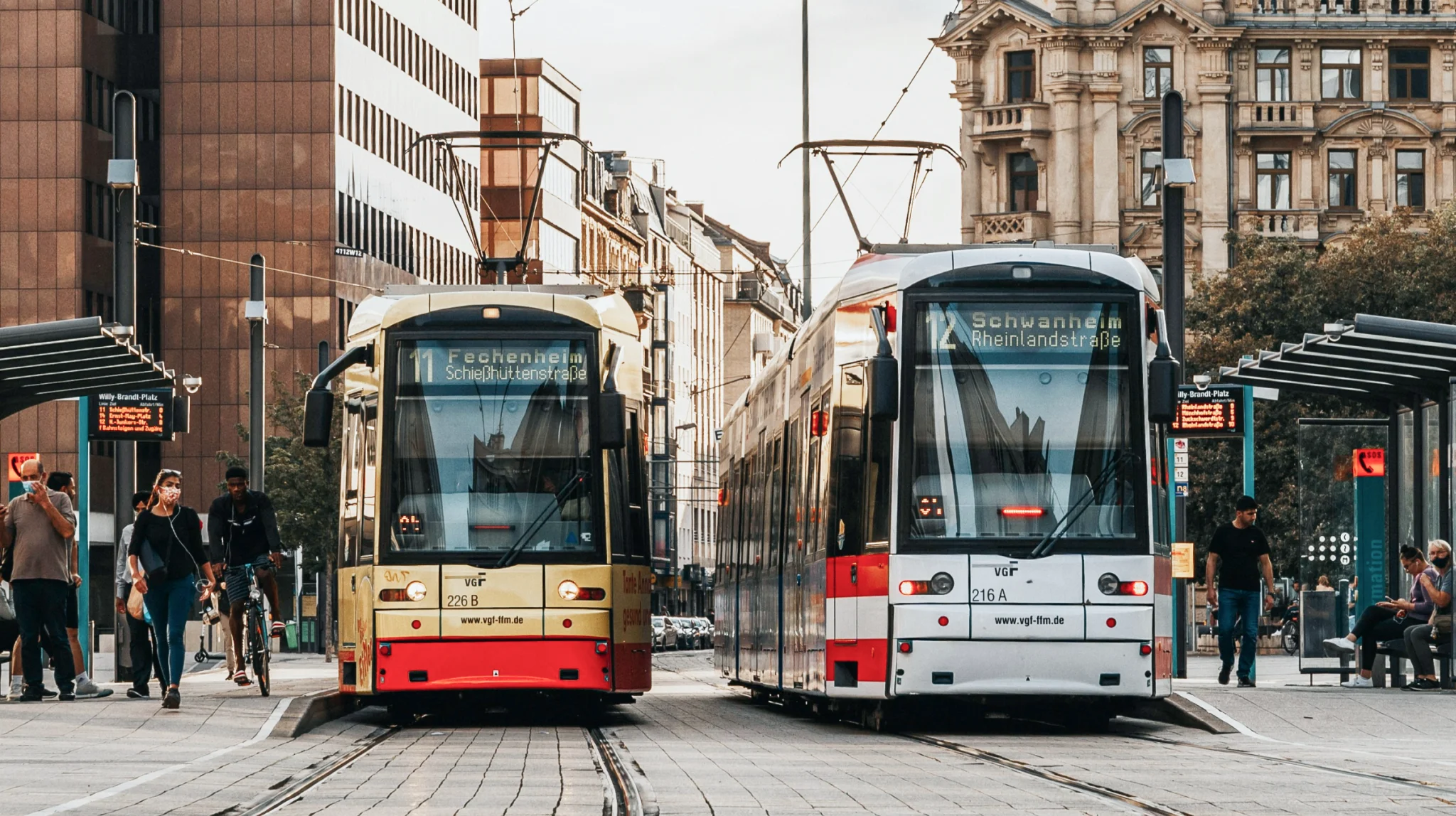
Nowhere is that engine more essential than on urban streets. Buses, trams, and light-rail vehicles already generate a stream of GPS pings, fare taps, and camera frames, but the raw data often sits idle in silos while customers pace around in frustration. The pressure will only increase: a global push to digitize urban services is expected to attract funding of the sensors, cloud backends, and, most importantly, the AI-powered analytics that use real-time feeds. Think about Machine Learning models that predict crowding before a crowd forms, traffic signals that stay green for late buses, and passenger apps that braid every leg into one trip.
Hence, let’s have a look at the highest-value use-cases, from predictive headways to energy-smart e-bus dispatch, so that agencies can board the data train before it leaves the station.
Static timetables are now living, AI-powered networks
The paper schedules used by public transport for most of the 20th century were based on yesterday’s traffic, typical boarding times, and ideal vehicle performance. Any disturbance — a wheelchair boarding unexpectedly, a congested intersection, a minor engine issue — could ripple through the day and leave travelers unaware and controllers juggling fires. But, with real-time data and AI analytics, the narrative is completely changed: the network listens to itself every few seconds and makes adjustments before small delays turn into missed connections. This is where AI helps most, converting scattered signals into decisions that hold service together.
Modern data pipelines: AVL, APC, and GTFS-RT
The backbone of a “living” network is a continuous data feed:
| Legacy practice | Live data pipeline | Immediate value for transit agencies |
|---|---|---|
| Timetables updated quarterly in PDFs | GTFS-RT feeds pushed every 10-30 s | Passenger apps show second-by-second accuracy |
| Manual headcounts a few days per year | Door-mounted APC sensors streaming boardings/alightings | Dynamic load balancing and capacity planning |
| Radio calls for location checks | GPS-based AVL pings every 5 s | Automated incident detection and re-routing |
| Text alerts typed by dispatch | Integrated control dashboard publishing to signs & apps | One click updates every channel simultaneously |
These feeds are brought together in a cloud lake or on-premise “hub,” where they are time-synchronised, cleaned up, stored, and used for Machine Learning. By agreeing on the use of GTFS-RT and open APIs, agencies avoid vendor lock-in and can add on future sensors – road-weather, traffic-signal priority, even fare-gate counts – without re-plumbing the pipeline.
Machine Learning models that forecast demand and headways
When data is flowing steadily and reliably, predictive models start tracking the hidden patterns of the network. AI models built on LSTM neural nets or gradient-boosted trees consume:
- AVL traces: speed, dwell, and intersection delay
- APC totals: boarding spikes caused by events or school dismissals
- Context layers: weather, holidays, road works, social-media chatter
The models generate rolling headway forecasts and crowding predictions over 5 minutes, 10-minutes, or 30 minutes. If a corridor is about to bunch, the control system can proactively:
- Initiate a short-turn or express skip on the lagging vehicle.
- Notify riders via alerts regarding alternate routing options.
- Re-sequence traffic-signal priority windows to open a free passage.
Transit agencies make use of a living, working forecast rather than simply reacting after a delay has occurred, keeping buses evenly spaced, trains relatively on time, and making every effort toward keeping riders happy even when the city is throwing the unexpected at them. Over time, these forecasts prove how far AI in transportation has moved past static planning.
Dynamic fleet optimization and predictive maintenance
Even the most carefully outlined timetable is disrupted as soon as reality intervenes – for example, a bus breaks down; a concert unexpectedly releases a large number of passengers; a crash blocks a major thoroughfare. AI-powered optimization engines create a solvable puzzle out of these unplanned occurrences by continuously processing a stream of live data from AVL, APC, traffic sensors, and social event feeds. The moment an anomaly is detected, the system will simulate hundreds of alternative rerouting or resequencing options in seconds, and will rank these options according to their operational cost, the impact on the passengers, and any driver hours of service limitations. Deployed at scale, these AI tools give controllers a clear set of ranked choices instead of guesswork.
Here’s how it works:
- Detection of incidents in real-time. Machine Learning classifiers detect speed traces and dwell outliers; a stalled bus or rail car, for example, can be flagged with no radio call needed.
- Short turns and express insertion. While dispatch redirects a relief vehicle from a low-demand route, the algorithm may tell the trailing coach to leapfrog stops and restore spacing if headways start to clump.
- Dynamic interlining. If the subway breaks down and pushes riders onto the corresponding bus routes, that bus platform can then apply service from the neighbouring bus lines and immediately update the GTFS-RT feeds to reflect the frequency changes in clients’ apps.
- Passenger and asset constraints. The optimisation function addresses embedded union contract conditions, layover windows, battery charging levels for E-buses, and depot capacity to verify that the potential fixes are physically possible.
Transit operators enjoy a double benefit: reliable service delivery and low recovery costs. Instead of having controllers try to minimize service delivery harm through improvisation, controllers will be freed up to go from “manual crisis” mode to proactive “supervisory oversight,” signing off on AI-generated plans. These same AI algorithms weigh cost, passenger impact, and crew rules in a single pass. For riders, they experience fewer cascading delays, receive up-to-the-minute accurate information, both key constituents in maintaining trust and increasing ridership. Effectively, the fleet becomes a fluid, self-healing system. Vehicles relocate themselves to where they are needed the most, service gaps close before they grow, and the city’s mobility pulse continues to actively “thump” despite breakdowns, congestion, or unexpected surges in demand.
Dive deeper into the AI-powered fleet optimization opportunities.
Enhancing the passenger journey with seamless, personalized data
There’s profound meaning in a ride – a journey is more than a bus or train; it’s simply the string of micro-decisions made by a rider from their front door until they are at their final stop. An AI-based platform is now able to put those decisions together in real-time to create real-time prompts for the rider, turning raw data into what feels like intuitive nudges. The instant a commuter opens a trip-planning app, Machine Learning models assess route and capacity across two or more parallel heading routes, distance and walk times to all other stops, live elevator status prioritizing accessibility, and local weather, all before offering one suggestion. The end user is provided with a trip that integrates speed, comfort, and mobility needs, without needing to lift a finger. This kind of personalization shows how the application of AI reaches the individual rider, not just the control room.
The journey is framed and re-framed along the route in dynamic push alerts, “Next bus is two minutes late. Platform B has extra seats,” or “Congestion ahead, transfer to tram at City Square for a quicker arrival.” Generative AI now drafts these rider messages in clear, natural language and adapts them to each situation. Each alert is powered by the real-time AVL and APC streams in conjunction with crowd-sourced and ticketing taps supplied by transit operators around the globe that continually feed the engine every block.
Personalization is not just convenience — it’s equity. Riders who are visually impaired receive guided audio prompts from start to finish of their trip that are aligned with the beacons’ data. Fare-capping algorithms will track a rider’s daily spend and will even move the best pay-as-you-go traveler to the best day pass automatically to protect the rider’s budget and increase goodwill.
For operators, these micro-services mean macro benefits like: improved boarding flow; more scientific load distribution; fewer customer-service complaints. When riders feel acknowledged—literally, with data lenses that see them and anticipate their needs—they reward the system with increased trust and repeat journeys. Simply put, personalized real-time intelligence elevates public transport from a fixed utility into a responsive concierge that leads every rider as if the network were built for them. Handled well, these AI projects pay back the investment through loyalty and steady ridership.
Energy and asset efficiency for electric and hybrid fleets
Although hybrids and electric buses make the streets cleaner, they also present high-stakes balancing concerns, such as charger lines, grid unpredictability, battery state of charge, and extremely strict pull-out timetables. Artificial Intelligence streams real-time data, including route topography, passenger loads, HVAC draw, battery health, and real-time utility pricing, into an optimization engine that is constantly updated, reducing the complexity of the data into a manageable equation. The goal is to launch the vehicles with a narrow window of opportunity, return them with secure supplies, and recharge them at the lowest cost of electricity. Energy management is now one of the clearest returns on advanced AI, since every avoided demand charge falls straight to the bottom line. These gains explain why the transportation industry treats fleet electrification and analytics as a single program rather than two.
| Key data signals | AI-driven action | Resulting efficiency gain |
|---|---|---|
| State of charge + route grade | Auto-schedules mid-shift “opportunity charging” | Extends daily range without spare vehicles |
| Charger occupancy + utility tariff | Staggers plug-ins during off-peak windows | Cuts demand charges and flattens depot load curves |
| Battery temperature + depth-of-discharge history | Recommends gentler charge curves | Adds cycles to battery life, delaying pack replacement |
| Real-time load factor (APC data) | Assigns diesel hybrids to high-passenger trips, keeps EVs on lighter loads | Maximises energy per seat-kilometre |
| Traffic speed + signal priority feed | Updates the regenerative-braking strategy | Recovers more energy, reducing net kWh per trip |
Applied across a full transport network, the same signals that smooth headways also flatten depot load curves and extend battery life. Agencies that coordinate both see cleaner transport operations without adding spare vehicles to cover the gaps.
FAQ
Using AI in public transportation to create a smarter, greener public transit system
Modern public transportation is powered by real-time data, which is no longer an optional addition. Schedules become projections, breakdowns become forecasts, and passenger journeys appear to be extremely smooth when transit agencies integrate AI and machine-learning models with AVL, APC, and GTFS-RT signals. These capabilities transform public transport systems from fixed schedules into networks that respond in real time.
The strategy is straightforward: evaluate your data, insist on open APIs, adopt an ethical framework, and conduct a small-scale pilot before launching a citywide deployment. The benefits will be lower prices, cleaner fleets, and system-trusting passengers for agencies who wish to shift first. Early wins with AI in public transit give these agencies the evidence to scale with confidence. Those who are hesitant will see their investment (and passengers) use more advanced, intelligent, data-driven networks.
The agencies that adopt open, data-driven systems first will set the standard for reliable service. Contact Avenga to bring AI to your transit operations.

Enterprise data hub: A practical guide to connected enterprise data
Data-driven retail: How retail data and AI shape the future of retail
Your business results matter
Achieve them with minimized risk through our bespoke innovation capabilities. Fill in the form below.