



How to Truly Engage Employees in Change


July 15, 2025 5 min read
Getting 4,500 employees to adopt a brand-new collaboration platform is no small feat-especially when half of them have never used tools like it before. So, how do you make a change of that scale successful?
It starts with people. By identifying key influencers in the organization and aligning them around a shared goal, the foundation for change becomes much stronger. From there, a thoughtful rollout strategy-one that begins with managers and expands across teams based on roles, interest, and readiness-can turn resistance into engagement.
But strategy alone isn’t enough. What really drives successful change management and employee engagement is meaningful involvement from every level of the organization. That’s where the power of participation comes in.
Why Change Efforts Often Fall Short
When an organization introduces new technology or systems, success is often assumed to follow naturally. But access doesn’t equal adoption.
Take, for example, a company that rolled out Microsoft Teams to thousands of employees to improve communication. A full year later, many still weren’t using it-even though the tool was available. The issue wasn’t with the technology itself, but with the lack of real engagement.
This scenario is common: big investments in tools, with limited focus on how people are expected to use them. To move the needle, organizations need to take a more holistic approach-one that considers not just the rollout, but the human response to change. That’s where employee engagement and organizational change must be treated as interconnected efforts.
Creating Curiosity and Momentum
Employee engagement is more than a buzzword-it’s a critical driver of transformation. But achieving it takes more than top-down directives. It requires building curiosity, motivation, and ownership across the organization.
That means engaging employees in the change process early and often, giving them a voice in shaping the outcome, and supporting their journey with tools, time, and trust. When change feels imposed, people resist. When it feels relevant and empowering, they engage.
Change management research supports this. According to Prosci ©*, projects that integrate structured change management practices are significantly more likely to meet or exceed their goals-often within budget and on time.
*Reference: (Prosci Inc., Reinforcing and Sustaining Change Outcomes)
The Three Roles That Make-or-Break Change
Sustainable change hinges on the active participation of three key roles:
- The Sponsor sets the vision and continuously champions the change across the organization.
- The Closest Manager integrates change into daily workflows and creates space for team discussion and reflection.
- The Individual chooses how deeply to engage, guided by self-leadership and open conversations with their manager.
When all three roles are aligned and empowered, both employee engagement and organizational change gain real traction.

Why Many Change Efforts Still Fail
Despite good intentions, many change initiatives fall short. Why? Because employees are often left out of the loop.
Leadership might believe they’re saving time or avoiding disruption by pushing out training links and assuming compliance will follow. But real change doesn’t come from checklists. It comes from connection.
Humans naturally resist change. It’s uncomfortable. It threatens routines, introduces uncertainty, and often triggers fear of failure. Without thoughtful guidance and a space for dialogue, resistance wins.
Making Change Stick
True organizational change happens when every employee is brought along on the journey.
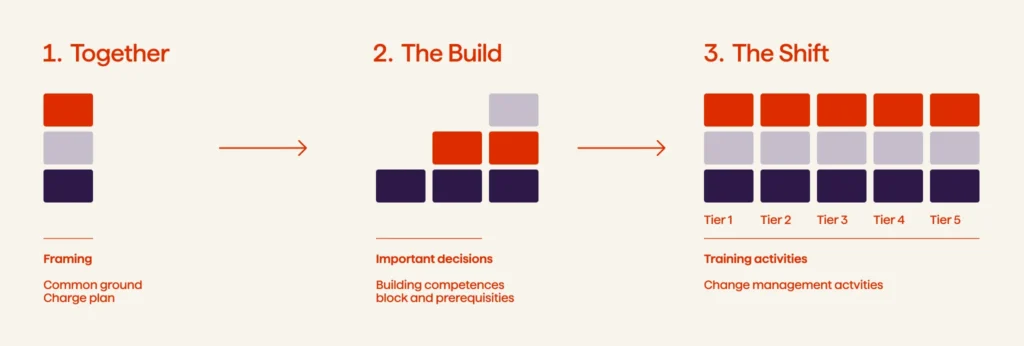
To achieve this, a structured, human-centered model is essential. One example includes three phases:
1. Together
The goal here is alignment. Start by identifying key stakeholders and subject matter experts to build a shared understanding of the change and its boundaries. Capture diverse perspectives to ensure the foundation is strong and inclusive.
2. The Build
This phase involves creating the tools and plans to support change. That includes detailed project timelines, training schedules, and communication strategies that resonate. A strong narrative helps employees understand the “why,” while interactive sessions with managers deepen commitment.
3. The Shift
The final step is where change comes to life. Employees begin using new tools or processes, supported by their managers and empowered to lead their own transition. This is where engaging employees in the change process transforms intention into action.
A Word on Budgeting for Engagement
Many organizations allocate funds for technology and infrastructure, but neglect to invest in change management. Why? Because engagement is hard to measure.
But skipping this step is costly. Without dedicated resources for managing change, even the best technical implementations fall flat. Investing in people-through change coaching, communication, and leadership alignment-delivers long-term returns.
When employees are supported in stepping out of their comfort zones, self-leadership flourishes. And with that comes stronger adoption, higher productivity, and lasting impact.
If your organization is preparing for transformation, make sure change management and employee engagement are top priorities. True change begins with people.
Let’s talk about how you can build a truly engaged workforce—one step at a time.



Your business results matter
Achieve them with minimized risk through our bespoke innovation capabilities. Fill in the form below.